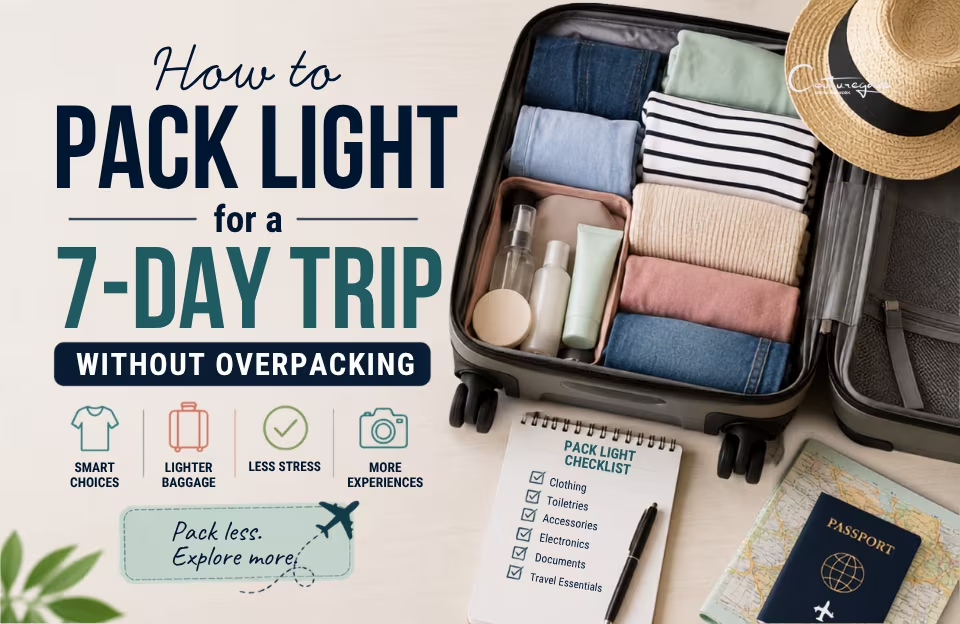
Packing for seven days sounds simple, until the suitcase is open, the bed is covered in clothes, and somehow half your wardrobe is waiting to go on holiday with you.
The problem usually isn’t the size of the suitcase.
It’s that we tend to pack for every possible version of the trip:
“What if I need this?”
“What if the weather changes?”
“What if I want another outfit?”
“What if I suddenly need something formal?”
Before long, a seven-day trip has turned into a suitcase for three weeks.
The good news? You don’t need seven completely different outfits to pack for seven days.
With a little planning, versatile clothing, and a realistic idea of what you’ll actually do, you can create a lighter suitcase without feeling like you’ve left everything useful at home.
In this guide, we’ll break down what to pack for a 7-day trip, how much clothing you really need, what to leave behind, and how to make your existing pieces work harder.
- The Secret to Packing Light: Pack for the Trip, Not the Possibilities
- Step 1: Check Your Itinerary Before Choosing Clothes
- Step 2: Build a Small Mix-and-Match Wardrobe
- Step 3: Choose Your Shoes Before You Fill the Suitcase
- Step 4: Plan Outfits Instead of Packing Individual Clothes
- Step 5: Don't Pack Seven Days of Everything
- Step 6: Keep Toiletries Under Control
- Step 7: Pack for the Weather but Don't Pack for Every Forecast
- Step 8: Use Your Personal Item Strategically
- Step 9: Leave Some Space
- The "Would I Pack This Again?" Test
- A Simple 7-Day Packing Formula
- What Not to Pack for a 7-Day Trip
- The Final Packing Check
- The Goal Isn't the Smallest Suitcase
The Secret to Packing Light: Pack for the Trip, Not the Possibilities
The easiest way to overpack is to start with the question:
“What might I need?”
Instead, start with:
“What am I actually going to do?”
Look at your itinerary.
Are you spending most of the week sightseeing?
Will there be beach days?
A nice dinner?
Business meetings?
Long travel days?
Outdoor activities?
Once you know how you’ll spend your time, packing becomes much easier.
A seven-day city trip and a seven-day beach holiday may both last one week, but the contents of the suitcase shouldn’t look anything alike.
How Much Should You Pack for 7 Days?
There isn’t one perfect number of clothes for everyone.
However, a useful starting point for a typical seven-day trip could be:
| Item | Suggested amount |
| Everyday tops | 4–5 |
| Bottoms | 2–3 |
| Dress / smarter outfit | 1–2 |
| Lightweight layer | 1–2 |
| Sleepwear | 1–2 |
| Underwear | 7–8 |
| Bras / everyday essentials | 2–3 |
| Socks | 4–7 pairs |
| Main shoes | 1 pair |
| Optional second pair | 1 pair |
| Outerwear | 1, if required |
Think of these numbers as a starting point, not a rule.
If you’re travelling somewhere hot, your clothing needs will be different from a winter destination.
If laundry is available, you can pack less.
If your trip involves hiking, formal events, or specific activities, you’ll need to adjust accordingly.
The goal isn’t to hit a magic number.
The goal is to avoid packing seven versions of the same thing.
Step 1: Check Your Itinerary Before Choosing Clothes
Before opening your wardrobe, make a quick list of what you’ll actually be doing.
For example:
Day 1: Travel + casual evening
Day 2: Sightseeing
Day 3: Sightseeing + dinner
Day 4: Beach
Day 5: Sightseeing
Day 6: Free day + restaurant
Day 7: Travel home
Now you’ve got something much more useful than “seven days.”
You’ve got a picture of your actual clothing requirements.
This prevents a common packing mistake: choosing clothes first and trying to invent reasons to wear them later.
Step 2: Build a Small Mix-and-Match Wardrobe
Here’s where packing gets easier.
Instead of planning seven completely separate outfits, choose clothing that works together.
For example:
- 4 tops
- 2 bottoms
- 1 dress
- 1 lightweight layer
- 2 pairs of shoes
Those pieces can potentially create considerably more than seven combinations.
The trick is compatibility.
If almost every top works with almost every bottom, you don’t need as many individual pieces.
A simple colour strategy
You don’t have to pack only neutrals.
Instead, choose a small colour palette.
For example:
Base: black, white, beige, navy
Accent: burgundy, green, blue, or another colour you enjoy
This makes combining outfits much easier.
And if you’re already building a capsule wardrobe, this approach should feel familiar.
You can also explore our Travel Capsule Wardrobe: Pack Smart with Fewer Clothes for Every Trip guide for a more detailed approach to creating a compact travel wardrobe.
Step 3: Choose Your Shoes Before You Fill the Suitcase
Shoes are often the silent reason a suitcase becomes heavy.
They’re bulky, awkward to pack, and rarely compress very much.
So instead of packing shoes for every outfit, start by asking:
What activities actually require different footwear?
For many trips, you may only need:
- One comfortable everyday pair
- One second pair for evenings or a specific activity
Wear the heavier pair while travelling whenever practical.
And before adding another pair, ask:
“What can this pair do that my other shoes can’t?”
If the answer is “not much,” leave them at home.
Step 4: Plan Outfits Instead of Packing Individual Clothes
This is one of the easiest ways to stop overpacking.
Lay out the clothes you’re considering and create actual combinations.
For example:
Top A + Bottom 1
Top B + Bottom 1
Top C + Bottom 2
Top D + Bottom 2
Dress + Layer
Suddenly, you can see whether you really need another top.
If one item only works with one other item, question whether it deserves suitcase space.
The Three-Outfit Test
Before packing a non-essential clothing item, ask:
Can I create at least three useful outfits with this?
If yes, it’s probably earning its place.
If no, think twice.
There will obviously be exceptions-special-occasion clothing and activity-specific gear don’t always pass this test.
But for everyday pieces, it’s a useful filter.
Step 5: Don’t Pack Seven Days of Everything
Seven days doesn’t automatically mean:
7 tops + 7 bottoms + 7 pairs of everything.
Some items can be worn more than once.
For example, a pair of jeans or trousers may work across several outfits.
A jacket or lightweight layer can be reused throughout the trip.
Sleepwear doesn’t necessarily need to change every night.
And if you’re comfortable doing a small amount of laundry, you can reduce your clothing even further.
The question isn’t:
“Have I packed enough clothes for seven days?”
It’s:
“Have I packed enough clean and practical options for seven days?”
Those are two very different things.
What About Laundry?
Laundry is one of the easiest ways to make a longer trip feel like a shorter one.
If you’re staying somewhere with laundry facilities—or you’re comfortable washing a few lightweight items by hand—you don’t need to pack a fresh version of everything for every day.
Even washing a couple of basic items midway through the trip can reduce how much you need to carry.
This is especially useful for:
- T-shirts
- Lightweight tops
- Underwear
- Socks
- Workout clothing
Just make sure you consider drying time before relying on this strategy.
Step 6: Keep Toiletries Under Control
Clothing gets most of the attention when people talk about overpacking.
Toiletries can quietly create another problem.
Instead of taking full-size bottles of everything, look at what you’ll genuinely use during seven days.
Consider:
- Shampoo
- Conditioner
- Cleanser
- Moisturizer
- Sunscreen
- Toothpaste
- Deodorant
- Hair products
- Makeup
- Personal-care essentials
Where appropriate, use travel-size containers.
And don’t automatically pack every product you use at home.
A seven-day trip probably doesn’t require your entire bathroom shelf.
A useful question:
“Will I realistically use this during the trip?”
If the answer is no, leave it behind.
Stay Hydrated While Travelling
Packing light isn’t only about what goes into your suitcase. It’s also about taking care of yourself while you’re on the move.
Long flights, road trips, hot destinations, sightseeing, and increased activity can all make it easier to forget about drinking enough water. Rather than guessing how much water you need each day, you can use our Water Intake Calculator to get a personalized estimate based on factors such as your body weight, activity level, and other details.
Planning a trip somewhere warm or expecting to be active? Check your daily hydration needs with our Water Intake Calculator before you leave.
Step 7: Pack for the Weather but Don’t Pack for Every Forecast
Check the weather before you leave.
Then pack accordingly.
If rain is likely, take a suitable rain layer.
If it’s going to be hot, prioritize breathable clothing.
If temperatures may drop in the evening, take one versatile layer.
But avoid turning every possible weather scenario into another outfit.
For example, if you’re travelling somewhere warm with a small chance of rain, you probably don’t need:
- A heavy coat
- A raincoat
- Two sweaters
- A fleece
- Three jackets
One versatile layer may be enough.
Prepare for realistic conditions, not every weather possibility imaginable.
Step 8: Use Your Personal Item Strategically
If you’re flying, don’t think of your carry-on or personal item as simply “another bag.”
Use it for the things you may need during the journey or couldn’t easily replace if your checked luggage were delayed.
Depending on your airline and trip, that can include:
- Travel documents
- Wallet
- Phone
- Charger
- Medication
- Valuables
- Essential toiletries
- A change of clothes
- Important electronics
Always check your airline’s current baggage and restricted-item rules before travelling.
Step 9: Leave Some Space
This sounds almost too simple.
But an empty corner of your suitcase is useful.
You may come home with:
- Souvenirs
- Gifts
- New clothes
- Local products
- Extra packaging
- Things you didn’t leave with
If your suitcase is already completely full when you depart, the return journey becomes unnecessarily difficult.
So don’t treat every empty space as an invitation to pack something else.
Sometimes:
empty space = good packing.
The “Would I Pack This Again?” Test
You’ve finished packing.
The suitcase is almost full.
Now look at every item you added because of a maybe.
Ask:
“If I had to leave this behind, would I actually miss it?”
If not, take it out.
Then ask:
“Can I create multiple outfits with this?”
If not, reconsider it.
And finally:
“Does this solve a real problem on my trip?”
If the answer to all three is no, you’ve probably found your next item to remove.
A Simple 7-Day Packing Formula
For a typical casual trip, you could start with something like:
- 4–5 versatile tops
- 2–3 bottoms
- 1–2 smarter options
- 1–2 layers
- 1–2 pairs of shoes
- underwear and personal essentials
- weather/activity-specific items
Then adjust according to your destination.
This isn’t a strict minimalist challenge.
It’s simply a way to prevent the suitcase from growing without a reason.
What Not to Pack for a 7-Day Trip
Sometimes the easiest way to pack light is knowing what not to pack.
Consider leaving behind:
- Clothes you don’t feel comfortable wearing
- Shoes you’ve never worn before
- Multiple “just in case” outfits
- Full-size toiletries when smaller quantities will do
- Clothing that only works with one specific item
- Too many accessories
- Duplicate electronics
- Things you can easily buy at your destination if necessary
And perhaps the biggest one:
Clothes you haven’t worn at home because you were “saving them for the right occasion.”
Travel isn’t the best time to discover that an outfit looks great on a hanger but feels terrible after two hours of walking.
The Final Packing Check
Before closing the suitcase, do one final review.
Clothing
☐ Can most pieces be mixed and matched?
☐ Do I have enough for the activities planned?
☐ Have I packed unnecessary duplicates?
☐ Is everything comfortable?
Shoes
☐ Can my shoes cover multiple situations?
☐ Am I taking more pairs than I genuinely need?
Toiletries
☐ Have I reduced unnecessary full-size products?
☐ Have I packed personal essentials?
Weather
☐ Have I checked the forecast?
☐ Do I have an appropriate layer or rain protection if needed?
Travel
☐ Documents
☐ Payment methods
☐ Phone and charger
☐ Medication
☐ Important valuables
Suitcase
☐ Is there some room left?
☐ Can I easily find the things I’ll need first?
☐ Am I carrying anything simply because there was space?
If the final answer is yes, remove it.
The Goal Isn’t the Smallest Suitcase
Packing light doesn’t mean competing to see how little you can take.
If you need specialist equipment, extra clothing for a formal event, medication, or activity-specific items, take them.
The goal is simply to avoid carrying things that don’t contribute anything to the trip.
A well-packed seven-day suitcase should feel intentional rather than restrictive.
You should have enough clothes to feel comfortable, enough flexibility to deal with changes, and enough space that you’re not fighting with the zipper on the way home.
And once you’ve done it a few times, packing becomes much easier.
You stop asking:
“What else should I take?”
and start asking:
“What can I leave behind?”
That’s usually when packing light finally starts to click.