
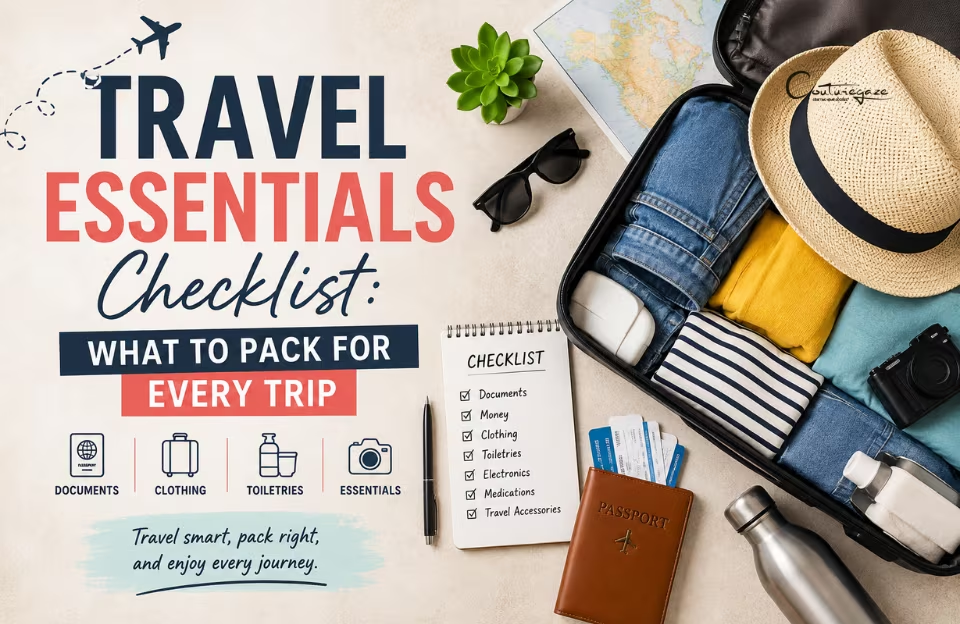
Start With What You Actually Need
Packing for a trip sounds easy.
Until the suitcase is open on the bed, clothes are scattered everywhere, and you’re suddenly asking yourself: “Do I really need this?”
Then comes the opposite worry: “What if I leave it behind and need it later?”
That’s where packing usually goes wrong.
The goal isn’t to pack everything that might be useful. It’s to pack the things that are likely to be useful for the trip you’re actually taking.
A weekend city break, a beach holiday, a mountain getaway, and a business trip don’t need the same suitcase.
This travel essentials checklist will help you work through the important categories without turning packing into a guessing game.
And here’s a useful rule to keep in mind throughout: Pack for your itinerary, not your imagination.
- Start With What You Actually Need
- What Are Travel Essentials?
- Before You Pack: Ask Yourself These 5 Questions
- 1. Documents & Important Travel Information
- 2. Money & Payment Essentials
- 3. Clothing: Pack for the Itinerary
- 4. Toiletries & Personal Care
- 5. Medications & Health Essentials
- 6. Electronics & Charging Essentials
- 7. What Should Go in Your Carry-On?
- 8. Travel Comfort Essentials
- 9. Weather-Specific Essentials
- 11. Don't Forget the Small Practical Items
- What You Probably Don't Need to Pack
- The 80% Packing Test
- One Last Question Before You Zip the Suitcase
- How to Pack Without Overpacking
- Keep Your Most-Used Items Accessible
- Keep Dirty Clothes Separate
- Common Packing Mistakes to Avoid
- Your Final Pre-Departure Checklist
- The 10-Minute Home Check
- Don't Forget the Return Journey
- A Better Way to Think About Travel Packing
- Frequently Asked Questions
- Related Travel Guides
- Conclusion
What Are Travel Essentials?
Travel essentials are the items that help you travel safely, comfortably, and practically.
Some are obvious:
- Passport or identification
- Money and payment cards
- Clothing
- Toiletries
- Phone and charger
Others are easy to overlook until the moment you need them.
For example, having your phone isn’t particularly helpful if you discover at the airport that your charging cable is sitting on your desk at home.
That’s why a good packing checklist shouldn’t simply focus on clothing.
It should cover the things that can cause genuine problems when forgotten.
Before You Pack: Ask Yourself These 5 Questions
Before pulling out your suitcase, take a minute to answer five simple questions.
1. Where am I going?
Your destination immediately changes what you need.
A tropical beach and a cold mountain town require completely different preparation.
2. How long am I staying?
A two-day trip doesn’t need the same quantity of clothing or toiletries as a two-week holiday.
3. What will I actually be doing?
Will you be:
- Walking around a city?
- Sitting on a beach?
- Hiking?
- Attending meetings?
- Visiting family?
- Going to restaurants?
- Moving between several destinations?
Your activities should influence what goes into your bag.
4. What will the weather be like?
Don’t rely only on the general reputation of a destination.
Check the forecast closer to departure and prepare for realistic changes in weather.
5. What can I easily buy at the destination?
This is an underrated packing question.
If something is inexpensive and readily available where you’re going, you may not need to use valuable luggage space carrying it from home.
You don’t need to prepare for every possible scenario.
Travel Essentials Checklist
1. Documents & Important Travel Information
Let’s start with the things you really don’t want to forget.
Clothing can usually be replaced.
A missing travel document can be much harder to solve.
Before leaving, make sure you have the documents relevant to your trip.
Essential documents may include:
- Passport
- Visa or entry documents, if required
- Government-issued identification
- Flight or train tickets
- Hotel or accommodation details
- Travel insurance information
- Driving licence, if you’ll be driving
- International driving permit, where required
- Emergency contact information
- Copies of important documents
For international travel, check the entry requirements for your destination before packing, rather than assuming your usual travel documents will be enough.
Keep copies too
Consider keeping secure digital copies of important documents in addition to carrying the originals.
The goal isn’t to create a suitcase full of paperwork.
It’s to make sure that if something goes wrong, you’re not completely dependent on a single physical document.
A small but useful habit
Before leaving home, ask:
“If I lost my phone right now, would I still know where I’m staying and how to contact someone?”
If the answer is no, keep essential information accessible offline as well.
2. Money & Payment Essentials
You probably don’t need to carry a huge amount of cash.
But you should have a backup payment option.
Consider taking:
- Primary payment card
- Backup card
- Some local currency where appropriate
- Wallet
- Travel-friendly money storage
- Emergency payment method
If you’re travelling internationally, check whether your cards work at your destination and whether your bank charges foreign transaction or withdrawal fees.
It’s also sensible not to keep every payment method in exactly the same place.
If your wallet goes missing, having a backup stored separately can make the situation considerably easier.
3. Clothing: Pack for the Itinerary
Clothing is where many suitcases become unnecessarily large.
The temptation is familiar:
“I’ll take one extra outfit… just in case.”
Then another.
And another.
Before you know it, you’ve packed enough clothes for a completely different holiday.
Instead, look at your actual itinerary.
Think in outfits, not individual items.
If you’re spending three days exploring a city, you may need comfortable walking clothes and perhaps one slightly smarter outfit.
If you’re attending a business event, your requirements will obviously be different.
If you’re going to the beach, swimwear and lightweight clothing become priorities.
And if you’re hiking, specialized footwear and appropriate layers matter much more than bringing several casual outfits.
For a more detailed approach to creating versatile travel outfits with fewer pieces, you can also explore our Travel Capsule Wardrobe guide.
The objective here isn’t to build another wardrobe.
It’s simply to make sure the clothes you pack match what you’re actually going to do.
4. Toiletries & Personal Care
Toiletries are another category where people often pack far more than necessary.
You probably don’t need your entire bathroom cabinet.
Start with the things you genuinely use every day.
Basic toiletries may include:
- Toothbrush
- Toothpaste
- Deodorant
- Face cleanser
- Moisturizer
- Shampoo and conditioner
- Hairbrush or comb
- Razor
- Sunscreen
- Lip balm
- Personal hygiene products
For short trips, travel-sized containers can save space.
And if you’re staying somewhere that provides basic toiletries, check what’s already available before packing duplicates.
Don’t forget the less obvious items
Think about your normal routine.
If there’s something you use every morning or evening and can’t easily replace at your destination, put it on your checklist.
That might be a specific skincare product, contact lens supplies, prescription items, or another personal-care essential.
5. Medications & Health Essentials
This category deserves more attention than it usually gets.
If you take prescription medication, don’t leave it until the last minute to pack it.
Keep necessary medication with you according to the requirements for your destination and travel method.
Depending on your trip, you may also consider:
- Prescription medication
- Copies of prescriptions where appropriate
- Basic first-aid supplies
- Motion-sickness products if needed
- Pain-relief medication you normally use
- Plasters or bandages
- Hand sanitizer
- Insect repellent
- Sunscreen
- Any destination-specific health items
For international travel, medication rules can differ between countries, so check the relevant official requirements before departure if you’re carrying prescription or restricted medicines.
One important packing principle
If an item is medically important, don’t treat it like an ordinary suitcase item.
Your checked luggage could be delayed or lost.
Keep essential medication and other critical items accessible according to your travel circumstances.
A Quick Packing Reality Check
At this point, your list may already look longer than expected.
That’s okay.
But before adding anything else, look at every item and ask:
“Will I actually use this on this particular trip?”
If yes, keep it.
If you’re unsure, put it aside for now.
You’ll get another chance to reconsider it later.
Because the best packing checklist isn’t the one that helps you fit the most things into a suitcase.
It’s the one that helps you leave home knowing you have what you actually need.
The Things You Remember Only When You Need Them
You’ve covered the obvious categories: documents, money, clothing, toiletries, and health essentials.
Now we get to the items that are easy to overlook because you don’t think about them every day.
Until you need them.
A dead phone at the airport.
A cold flight without a layer.
Rain arrived when the forecast looked perfect.
A long journey with nowhere comfortable to rest.
These are the small problems that can turn into surprisingly big annoyances.
6. Electronics & Charging Essentials
Your phone may be your camera, boarding pass, map, translator, booking tool, entertainment, and emergency contact—all in one.
So keeping it powered is no longer a minor detail.
Consider packing:
- Phone
- Phone charging cable
- Wall charger
- Power bank
- Travel adapter, if required
- Laptop or tablet, if needed
- Charging cables for other essential devices
- Earphones or headphones
- Smartwatch charger, if applicable
- Camera and accessories, if you’re taking one
Don’t Pack Every Cable You Own
This is where an electronics pouch becomes useful.
Instead of throwing loose cables into your suitcase, gather only the chargers you actually need.
A simple question helps:
“What devices am I taking, and what does each one need to charge?”
That prevents you from carrying five cables for devices that aren’t even coming with you.
Check Your Destination Before Leaving
If you’re travelling internationally, check whether you’ll need a travel adapter for the electrical outlets at your destination.
And remember: an adapter changes the plug connection; it doesn’t necessarily convert voltage.
For devices with specific voltage requirements, check the manufacturer’s guidance before plugging them in.
7. What Should Go in Your Carry-On?
Here’s an important packing rule:
Don’t put everything you need in checked luggage.
Your carry-on should contain the items that would be difficult—or extremely inconvenient—to replace if your checked bag is delayed.
Depending on your trip, that can include:
- Travel documents
- Wallet and payment cards
- Phone
- Essential medication
- Prescription information
- Chargers
- Power bank, where permitted
- Important electronics
- A small amount of basic toiletries
- One change of clothes
- Essential personal items
A change of clothes might sound unnecessary when you’re expecting to collect your luggage at the other end.
But if your checked bag doesn’t arrive with you, that small backup can suddenly feel like the smartest thing you packed.
One more important point
Airlines have specific rules regarding liquids, batteries, power banks, sharp objects, and other items in cabin baggage.
Check your airline’s current baggage rules before you leave, especially if you’re carrying anything unusual.
8. Travel Comfort Essentials
Long journeys can make you appreciate very simple things.
A comfortable flight, train ride, or road trip doesn’t necessarily require a suitcase full of gadgets.
A few thoughtful items can be enough.
Depending on your journey, consider:
- Neck pillow
- Eye mask
- Earplugs
- Light scarf
- Reusable water bottle
- Small travel blanket
- Compression socks, if appropriate for you
- Headphones
- Small snack
You don’t need all of these.
The question is:
“What makes this particular journey easier for me?”
If you’re taking a one-hour train ride, a neck pillow may be unnecessary.
If you’re facing a 12-hour overnight journey, it could be a completely different story.
Don’t Forget Your Sleep Schedule
Travel isn’t only about what you pack in your suitcase. Your sleep routine can also be affected by early departures, late arrivals, long journeys, or simply sleeping somewhere unfamiliar.
If you have an early flight or want to plan your sleep around your travel schedule, our Sleep Calculator can help you work out suitable sleep and wake-up times.
A little planning before the journey can make those early mornings and long travel days easier to manage.
9. Weather-Specific Essentials
Checking the weather before a trip sounds obvious.
Yet it’s surprisingly easy to pack for the destination’s reputation instead of its actual forecast.
A destination known for sunshine can still have rain.
A warm city can have surprisingly cool evenings.
And mountain weather can change quickly.
For hot or sunny destinations
Consider:
- Sunscreen
- Sunglasses
- Hat or cap
- Lightweight clothing
- Reusable water bottle
- After-sun or soothing skincare, if needed
For rainy destinations
Consider:
- Compact umbrella
- Lightweight rain jacket
- Water-resistant bag
- Quick-drying clothing
- Waterproof protection for electronics
For colder destinations
Consider:
- Warm layers
- Jacket or coat
- Gloves
- Warm socks
- Hat
- Appropriate footwear
The key is layering rather than simply adding more clothes.
Several lighter layers can sometimes be more practical than packing one extremely bulky item.
Staying Hydrated While Travelling
Travel can make it surprisingly easy to forget about water. Long flights, hot weather, sightseeing on foot, and changes to your usual routine can all affect how much you drink throughout the day.
If you’re unsure how much water you generally need based on your personal details and activity level, try our Water Intake Calculator for a quick estimate.
For particularly hot or active trips, remember that your fluid needs may be different from your usual routine.
10. Destination-Specific Extras
Now think beyond the basic checklist.
What does your destination actually require?
Beach Trip
You may want:
- Swimsuit
- Beach cover-up
- Sunglasses
- Sunscreen
- Sandals
- Waterproof pouch
- Quick-drying towel, if not provided
Hiking or Outdoor Trip
Your priorities change completely.
Consider:
- Appropriate walking or hiking shoes
- Weather-appropriate layers
- Water bottle
- Small backpack
- Sun protection
- Navigation or offline maps
- Basic first-aid supplies
Don’t assume ordinary sneakers will be suitable for every trail.
Business Trip
Your list might include:
- Work-appropriate clothing
- Laptop
- Charger
- Presentation materials
- Notebook
- Pens
- Business cards, if you use them
- Comfortable but appropriate shoes
Winter Holiday
You may need to prioritize:
- Warm outerwear
- Thermal layers
- Gloves
- Hat
- Warm socks
- Weather-appropriate footwear
The lesson is simple:
The destination should influence your packing list more than a generic “travel essentials” list does.
11. Don’t Forget the Small Practical Items
Some things are neither exciting nor particularly photogenic.
They’re also the things you may be very happy to have.
Depending on your trip, consider:
- Small laundry bag
- Reusable shopping bag
- Zip bags
- Luggage tags
- Small padlock where appropriate
- Pen
- Compact umbrella
- Tissues
- Hand sanitizer
- Reusable bottle
- Small day bag
You don’t need to pack an entire emergency kit.
Just think about the small inconveniences you can reasonably anticipate.
What You Probably Don’t Need to Pack
This might be the most useful part of the entire checklist.
Because packing isn’t only about deciding what to take.
It’s also about deciding what to leave behind.
Multiple “Just in Case” Outfits
One backup outfit can be sensible.
Five probably aren’t.
Full-Size Toiletries
If you’re travelling for a few days, bringing enormous bottles of shampoo, cleanser, and body wash usually isn’t necessary.
Too Many Shoes
Shoes take up valuable space.
Choose pairs that match the activities you actually have planned.
Every Electronic Device
If your phone can handle the job, do you really need a tablet, laptop, camera, gaming device, e-reader, and three sets of headphones?
Maybe.
But probably not for every trip.
Clothing for Imaginary Occasions
This is the classic packing trap:
“What if I suddenly need something formal?”
If your itinerary contains no formal event, think carefully before sacrificing suitcase space for an imaginary one.
The 80% Packing Test
Here’s a useful trick before closing your suitcase.
Look at everything you’ve packed and ask:
“If I had to remove 20% of this, what would go first?”
Don’t actually remove anything immediately.
Just identify the items.
Those are often the things you don’t really need.
Then ask the opposite:
“Is there anything essential that I would seriously struggle without?”
If something important is missing, add it.
This gives you a much more balanced packing list than simply trying to make your suitcase as full as possible.
One Last Question Before You Zip the Suitcase
Look at your packed bag and ask:
“Am I packing this because I’ll use it or because I’m afraid I might need it?”
There’s a difference.
Good packing isn’t about predicting every possible situation.
It’s about preparing intelligently for the most likely ones.
And once you stop packing for every imaginary scenario, you’ll often discover that travelling with less isn’t nearly as difficult as it first seemed.
Pack Smarter, Check Twice, Then Go
At this point, you probably have most of the important items on your list.
Now comes the part that can make the biggest difference:
How do you know you haven’t packed too much—or forgotten something important?
You don’t need to keep reopening your suitcase every ten minutes.
A simple final system can make packing much less stressful.
How to Pack Without Overpacking
Packing efficiently isn’t about squeezing every last centimetre out of your suitcase.
It’s about making the things you’ve packed easy to find, easy to use, and easy to repack.
Start With the Bulkiest Items
Put shoes, jackets, and other bulky items into the suitcase first.
Then build around them.
If you’re taking shoes, use the space inside them for smaller items such as socks or accessories, provided the items are clean and appropriate to store there.
Roll or Fold Based on the Clothing
There’s no single “correct” way to pack clothes.
Rolling can work particularly well for casual clothing and smaller garments, while structured items may be better folded.
The goal is simply to keep everything organized and accessible.
Use Packing Cubes Where They Actually Help
Packing cubes can be useful when you’re carrying several categories of items.
For example:
- One cube for tops
- One for bottoms
- One for underwear and sleepwear
- One for accessories
But don’t buy packing cubes just because they’re popular.
If your suitcase is already easy to organize without them, you don’t need another travel accessory.
Keep Your Most-Used Items Accessible
Think about what you’ll need before you reach your accommodation.
If you’re arriving late at night, you probably don’t want your sleepwear buried underneath everything else.
If you’re heading directly from the airport to a meeting, your work essentials shouldn’t be at the bottom of your suitcase.
If you’re travelling somewhere hot, you may want sunglasses or a light layer easily accessible.
Packing isn’t only about fitting things inside the bag.
It’s also about the order in which you’ll need them.
Keep Dirty Clothes Separate
A small laundry bag can make a surprisingly big difference.
As you travel, separate worn clothing from clean clothing instead of allowing everything to mix together.
This becomes particularly useful on longer trips.
You can also use the same system when packing for your return journey.
Clean clothes stay together.
Laundry stays separate.
And unpacking becomes much easier.
Common Packing Mistakes to Avoid
Even experienced travellers can fall into these traps.
Mistake 1: Packing for Every Possible Situation
“What if it rains?”
“What if I need formal clothes?”
“What if I suddenly decide to go hiking?”
“What if I need three different jackets?”
You can’t realistically prepare for every possibility.
Pack for your actual itinerary and reasonable weather variations.
Mistake 2: Ignoring the Weather Until the Last Minute
Checking the forecast once when you book the trip isn’t enough.
The weather can change.
Check it again shortly before departure and make small adjustments where necessary.
That might mean adding a light rain jacket rather than completely changing your suitcase.
Mistake 3: Forgetting the Journey Itself
People often pack perfectly for the destination and forget that getting there can take several hours.
Think about the journey separately.
Will you need:
- Entertainment?
- A charger?
- Water?
- Snacks?
- A light layer?
- Medication?
- Comfortable clothing?
- Something to help you sleep?
Your travel day is part of the trip too.
Mistake 4: Putting Everything Important in Checked Luggage
If your checked bag is delayed, you don’t want to discover that your medication, documents, charger, and only change of clothes are all inside it.
Keep critical and difficult-to-replace items appropriately accessible.
Mistake 5: Packing at the Last Minute
Last-minute packing encourages exactly the behaviour we’re trying to avoid:
throwing things into the suitcase because you don’t have time to think.
Even a rough packing list prepared a couple of days ahead can make the process much calmer.
Your Final Pre-Departure Checklist
The night before or a few hours before you leave, run through this list.
Documents
☐ Passport or ID
☐ Visa or required travel documents
☐ Tickets and reservations
☐ Travel insurance information
☐ Important contact details
Money
☐ Wallet
☐ Payment cards
☐ Some cash if appropriate
☐ Backup payment method
Electronics
☐ Phone
☐ Charger
☐ Power bank, where permitted
☐ Travel adapter if required
☐ Essential headphones or other devices
Health & Personal Care
☐ Prescription medication
☐ Toiletries
☐ Toothbrush and toothpaste
☐ Sunscreen
☐ Personal hygiene products
☐ Essential health items
Clothing
☐ Everyday outfits
☐ Underwear
☐ Sleepwear
☐ Appropriate footwear
☐ Weather-appropriate layers
☐ Activity-specific clothing
Carry-On
☐ Essential documents
☐ Phone and charger
☐ Medication
☐ Important valuables
☐ One basic change of clothes if appropriate
☐ Travel comfort items
The 10-Minute Home Check
Your suitcase is ready.
But don’t leave the house yet.
Take ten minutes to check the things that aren’t inside your luggage.
Look around:
Bathroom: Did you leave your toothbrush charging? Is your medication still on the counter?
Bedroom: Are your chargers plugged in? Did you actually pack your sleepwear?
Kitchen: Did you take your reusable bottle? Is anything perishable that needs attention before you leave?
Entrance: Keys? Wallet? Documents? Bags?
Phone: Is it charged?
Home: Windows, doors, appliances, and anything else you normally check before leaving.
It sounds simple.
But this final walk around the house can prevent the classic:
“I knew I was forgetting something.”
Don’t Forget the Return Journey
Here’s something people rarely include on packing lists:
Your return trip.
Think about what will happen after several days of travel.
You’ll probably have:
- Dirty clothes
- Souvenirs
- Receipts
- New purchases
- Less perfectly folded clothing than when you left
Leaving a little space in your luggage can make the journey home considerably easier.
You don’t have to fill every available centimetre on the way out.
A Better Way to Think About Travel Packing
A good packing list isn’t a test you pass by taking everything on it.
It’s a decision-making tool.
Your destination, itinerary, weather, travel duration, accommodation, and personal needs should determine what you take.
That’s why the perfect packing list for one traveller might be completely wrong for another.
A business traveller may need a laptop and formal clothing.
A beach traveller may need swimwear and sun protection.
A mountain traveller may need specialist layers and footwear.
A weekend city traveller may need little more than a small bag.
The checklist gives you the categories.
Your trip decides the contents.
Frequently Asked Questions
1. What should I pack for every trip?
The essentials that apply to most trips include identification or travel documents, money or payment methods, a phone and charger, necessary medication, basic toiletries, appropriate clothing, and comfortable footwear.
The rest depends on your destination and itinerary.
2. How can I avoid overpacking?
Start with your itinerary rather than your wardrobe.
Plan what you’ll actually do, check the weather, and choose items that can serve more than one purpose.
Then remove anything you’re packing purely because you might need it.
3. Should I make a packing list?
Yes, Even a simple checklist can prevent you from forgetting important items and can reduce last-minute packing.
Keep a basic master list and adjust it for each trip instead of starting from zero every time.
4. What should I keep in my carry-on?
Keep important travel documents, essential medication, valuables, important electronics, payment methods, and other difficult-to-replace items accessible.
The exact rules for cabin baggage vary by airline and destination, so check the current requirements before travelling.
5. How early should I start packing?
There’s no universal number of days.
For a simple short trip, preparing a checklist a few days ahead may be enough.
For international, longer, or activity-heavy trips, starting earlier gives you more time to check documents, weather, medications, and destination-specific requirements.
6. How many pairs of shoes should I take?
As few as your itinerary reasonably allows.
Choose footwear based on your actual activities rather than packing a different pair for every possible outfit.
Shoes are often among the bulkiest items in a suitcase, so versatility matters.
7. What should I do if I forget something?
Don’t panic.
First ask whether the item is genuinely essential.
Many ordinary travel items can be purchased at your destination.
For important documents, medication, or other critical items, however, the situation may require more careful action.
This is another reason to separate essential items from convenience items when packing.
Related Travel Guides
If you’re planning a trip from the beginning, start with our How to Plan a Trip for Beginners guide, which walks through the broader planning process.
If you’re trying to reduce the amount of clothing you pack while still having enough outfit options, explore our Travel Capsule Wardrobe: Pack Smart with Fewer Clothes for Every Trip guide.
And if you’re looking for a practical wardrobe system beyond travel, our Capsule Wardrobe for Women guide can help you build a more versatile everyday wardrobe.
Conclusion
Packing doesn’t have to begin with an overflowing suitcase.
Start with a better question:
“What will I actually need on this trip?”
From there, work through the essentials, documents, money, health items, clothing, toiletries, electronics, and anything specific to your destination.
Then stop.
You don’t need to pack for every imaginary situation.
You don’t need five backup outfits because you might change your mind.
And you don’t need to fill the suitcase simply because there is still space.
The best-packed suitcase is the one that contains what you need, leaves room for a little flexibility, and doesn’t make you wonder why you brought half of your house with you.
So before you zip it shut, ask yourself one final question:
“If I had to leave in ten minutes, what would I absolutely not want to forget?”
Those are your real travel essentials.
Everything else is negotiable.