Hair growth can often feel unpredictable. One day your hair seems to be growing well, and the next, you notice more strands than usual in your brush or shower drain. While this can be worrying, shedding a certain amount of hair every day is a completely natural part of your hair’s life cycle.
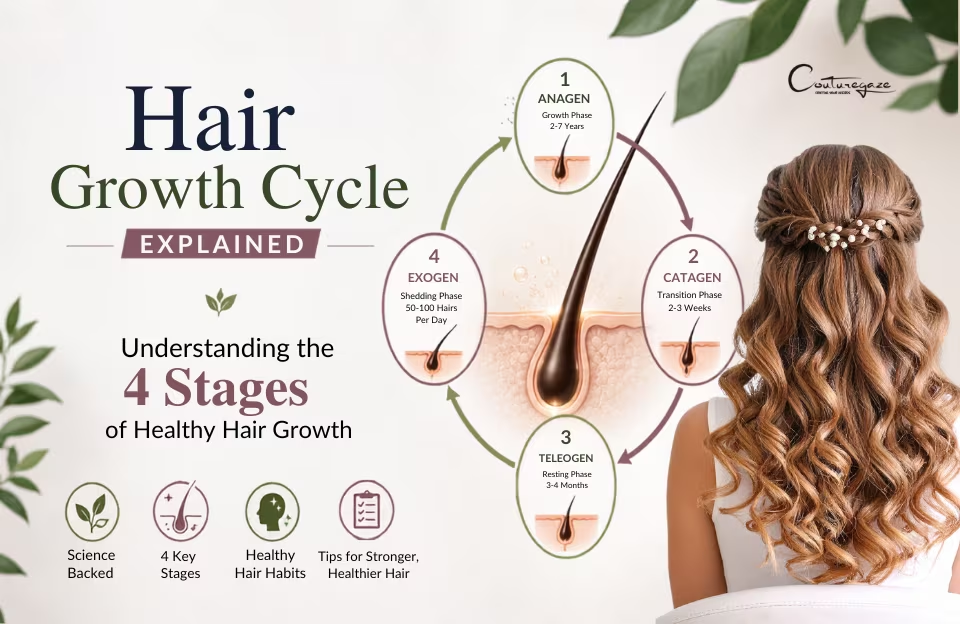
Every strand of hair on your scalp follows a continuous process known as the hair growth cycle. Rather than growing nonstop, each hair moves through four distinct stages: Anagen (Growth), Catagen (Transition), Telogen (Resting), and Exogen (Shedding). At any given time, thousands of individual hairs are in different phases of this cycle, ensuring your scalp always maintains healthy hair coverage.
Understanding how the hair growth cycle works can help you distinguish between normal hair shedding and potential hair loss. It also explains why healthy hair habits, good nutrition, and patience are essential when trying to grow longer, stronger hair.
In this guide, you’ll learn:
- What the hair growth cycle is
- The four stages of healthy hair growth
- How long each stage lasts
- Why hair naturally sheds
- Factors that affect the growth cycle
- Practical tips to support healthy hair growth naturally
Whether you’re trying to grow your hair longer, reduce excessive shedding, or simply understand how your hair works, this guide will walk you through everything you need to know.
- What Is the Hair Growth Cycle?
- Why Understanding the Hair Growth Cycle Matters
- Hair Growth Cycle at a Glance
- Meet Your Hair Follicle – Hair Follicle Anatomy
- How Fast Does Hair Grow?
- 1. Anagen (The Growth Phase)
- 2. Catagen (The Transition Phase)
- 3. Telogen (The Resting Phase)
- 4. Exogen (The Shedding Phase)
- Hair Growth Cycle Timeline
- Why the Four Stages Work Together
- What Can Disrupt the Hair Growth Cycle?
- How to Support Healthy Hair Growth Naturally
- Frequently Asked Questions
- Conclusion
- Continue Learning About Healthy Hair
What Is the Hair Growth Cycle?
The hair growth cycle is the natural process your hair follicles follow to grow, rest, shed, and regenerate new hair. Unlike many people assume, every hair on your scalp grows independently, meaning each follicle is at its own stage of the cycle.
This staggered growth pattern is incredibly important. If every strand of hair entered the shedding phase at the same time, you would lose all of your hair simultaneously. Instead, your follicles work asynchronously, allowing new hairs to grow while others are resting or naturally falling out.
On a healthy scalp:
- Around 85–90% of hair follicles are actively growing.
- About 10–15% are resting.
- A small percentage are transitioning or shedding.
This continuous cycle allows your scalp to maintain a full, healthy appearance throughout your life.
Why Understanding the Hair Growth Cycle Matters
Knowing how your hair grows isn’t just interesting, it’s useful for making informed decisions about your hair care routine and managing expectations.
It Helps You Understand Normal Hair Shedding
Finding hair in your brush, on your pillow, or in the shower isn’t necessarily a sign of hair loss. Most people naturally shed 50 to 100 hairs each day as part of the Exogen (shedding) phase.
It Sets Realistic Expectations
Healthy hair grows gradually, averaging around 1 to 1.25 cm (about 0.5 inch) per month. Because of this slow growth rate, noticeable improvements from changes in your hair care routine may take several months.
It Explains Why Hair Treatments Take Time
Whether you’re using a new shampoo, improving your diet, or following a dermatologist’s treatment plan, results rarely appear overnight. Since each follicle follows its own cycle, healthy hair growth takes patience and consistency.
It Helps You Identify Potential Problems
Understanding the four stages of hair growth makes it easier to recognize when something may be disrupting the normal cycle, such as excessive shedding, slower growth, or noticeable thinning.
If you experience sudden or persistent hair loss, consulting a healthcare professional or dermatologist is the best course of action.
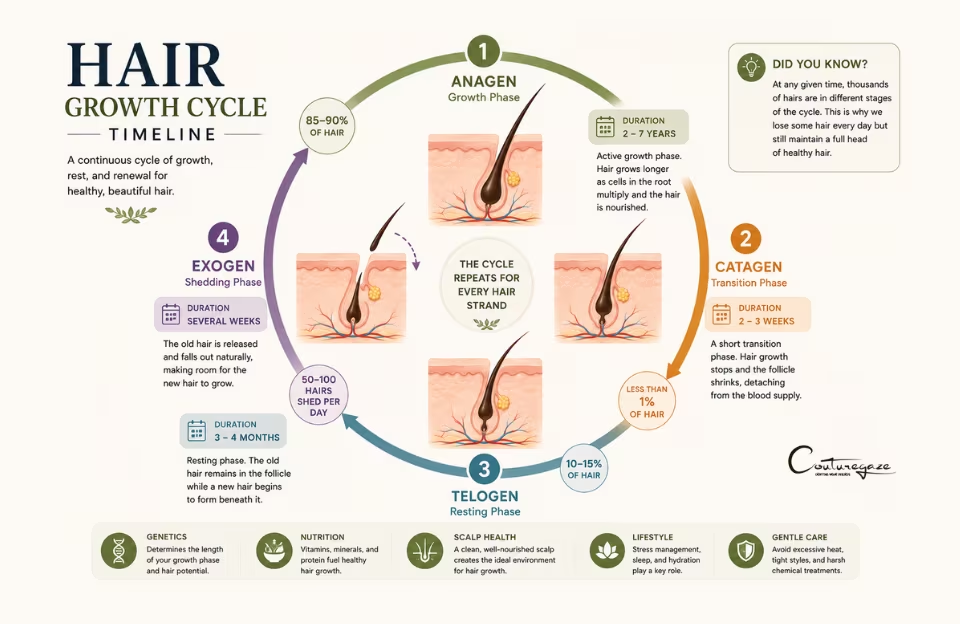
Hair Growth Cycle at a Glance
| Stage | What’s Happening | Average Duration | Hair on the Scalp |
| Anagen | Active hair growth | 2–7 years | 85–90% |
| Catagen | Growth slows and the follicle shrinks | 2–3 weeks | Less than 1% |
| Telogen | Hair rests while a new strand begins forming | 3–4 months | 10–15% |
| Exogen | Old hair sheds naturally | A few weeks to months | Around 50–100 hairs shed daily |
This continuous cycle repeats throughout your lifetime, with each hair follicle independently transitioning through the four stages.
Meet Your Hair Follicle – Hair Follicle Anatomy
Before exploring each stage of the hair growth cycle, it’s helpful to understand where hair actually grows.
A hair follicle is a tiny tunnel-like structure beneath the skin that anchors each strand of hair. It isn’t just a simple opening, it’s a complex mini-organ responsible for producing, nourishing, and renewing your hair.
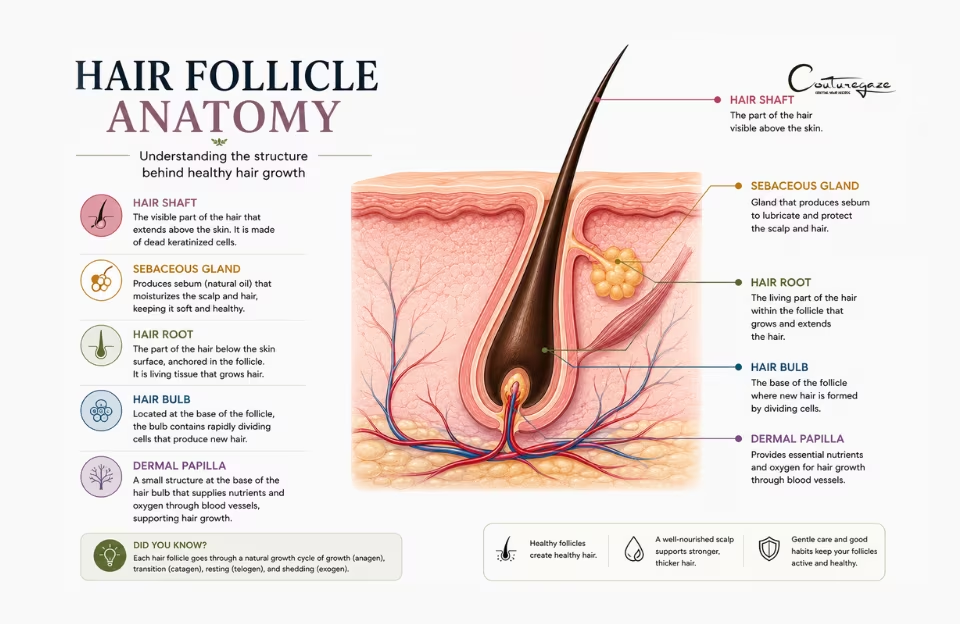
The key parts of a hair follicle include:
Hair Bulb
Located at the base of the follicle, the hair bulb contains rapidly dividing cells that create new hair.
Dermal Papilla
This small structure sits beneath the hair bulb and supplies oxygen and nutrients through tiny blood vessels. Healthy blood circulation is essential for supporting active hair growth.
Hair Root
The hair root lies below the surface of the skin and remains protected within the follicle while new hair forms.
Sebaceous (Oil) Gland
Attached to each follicle, the sebaceous gland produces sebum, a natural oil that helps moisturize both the hair and scalp.
Hair Shaft
The hair shaft is the visible part of your hair that extends beyond the scalp. Although it appears alive, it is actually made of dead keratinized cells.
Understanding the role of the hair follicle makes it easier to see how each stage of the hair growth cycle supports healthy, continuous hair production.
How Fast Does Hair Grow?
On average, scalp hair grows approximately 1 to 1.25 cm (about 0.5 inch) per month, though this varies from person to person. Genetics play a major role, but factors such as age, overall health, nutrition, hormones, and lifestyle habits can also influence growth rate.
Healthy hair growth is gradual, which is why meaningful changes often take several months to become noticeable. Staying consistent with a balanced diet, gentle hair care, and healthy daily habits is far more effective than expecting overnight results.
The 4 Stages of the Hair Growth Cycle
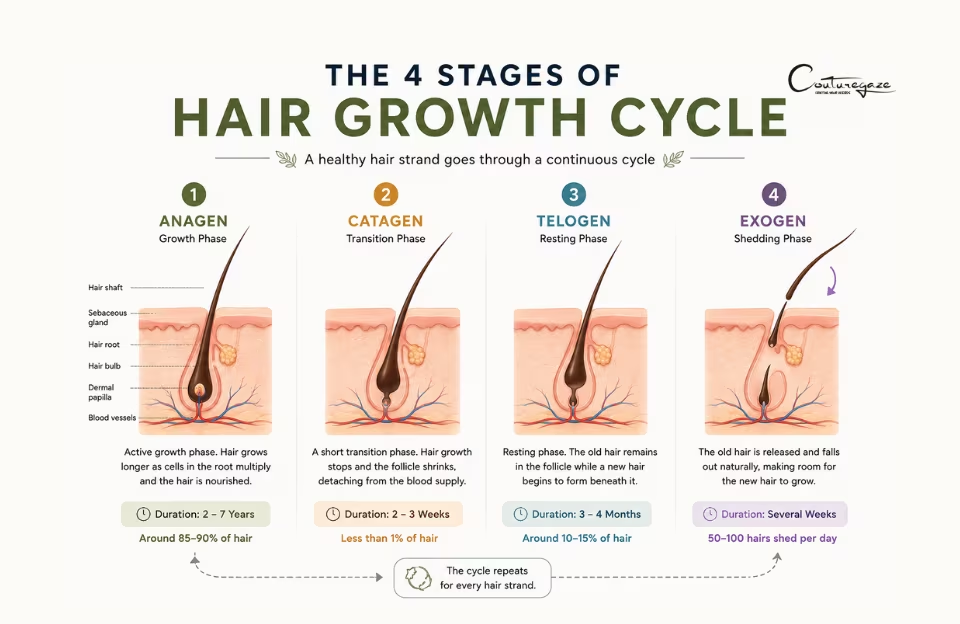
Every strand of hair on your scalp follows the same four-stage life cycle. While the stages are the same for everyone, the length of each stage can vary depending on factors such as genetics, age, hormones, overall health, and lifestyle.
Because each hair follicle operates independently, your scalp always contains hairs at different stages. This ensures continuous hair growth while naturally replacing older strands over time.
Let’s explore each stage in detail.
1. Anagen (The Growth Phase)
The Anagen phase is the longest and most active stage of the hair growth cycle. During this period, your hair is continuously growing because the cells inside the hair bulb divide rapidly to produce new hair fibres.
The dermal papilla at the base of the follicle supplies oxygen and nutrients through tiny blood vessels, providing the energy needed for healthy hair production.
For most people, this phase lasts between 2 and 7 years, although genetics largely determine its exact length. Some individuals naturally experience a longer Anagen phase, allowing them to grow very long hair, while others have a shorter growth phase that limits maximum hair length.
On average, hair grows approximately 1 to 1.25 cm (about 0.5 inch) per month during this stage.
What Happens During the Anagen Phase?
- Hair grows continuously from the follicle.
- Cells divide rapidly to form new hair.
- The hair shaft becomes longer each month.
- Blood vessels nourish the growing follicle.
- Melanin pigments give the hair its natural colour.
How Much Hair Is in This Stage?
Approximately 85–90% of the hair on a healthy scalp is in the Anagen phase at any given time.
Factors That Can Affect the Anagen Phase
Several factors influence how long your hair remains in active growth, including:
- Genetics
- Balanced nutrition
- Hormonal health
- Ageing
- Chronic stress
- Certain medical conditions
A longer Anagen phase generally means the potential for longer, fuller hair.
Did You Know?
Eyebrows and eyelashes also go through the same growth cycle, but their Anagen phase lasts only a few months. That’s why they remain much shorter than the hair on your scalp.
2. Catagen (The Transition Phase)
After years of continuous growth, each hair follicle enters the Catagen phase, a brief transitional stage that signals the end of active hair production.
During this time, hair growth stops completely. The lower portion of the follicle begins to shrink, and the hair detaches from its blood supply. The strand remains anchored in place, but it is no longer receiving nutrients needed for further growth.
This process also forms what is known as a club hair, a fully formed strand that is preparing to enter the resting stage.
Fortunately, Catagen is very short, usually lasting around 2 to 3 weeks.
What Happens During the Catagen Phase?
- Hair growth stops.
- The follicle shrinks.
- The blood supply disconnects.
- A club hair forms.
- The follicle prepares for its resting period.
How Much Hair Is in This Stage?
Less than 1% of scalp hair is typically in the Catagen phase at any given time because it passes so quickly.
Why Is This Stage Important?
Although short, Catagen is essential because it allows the follicle to reset before beginning a new growth cycle. Without this transition, healthy hair renewal wouldn’t be possible.
3. Telogen (The Resting Phase)
The Telogen phase is often misunderstood because many people assume their hair is no longer doing anything. In reality, while the existing strand is resting, important changes are taking place beneath the surface.
During this stage, the old hair remains securely attached inside the follicle while new cells begin preparing for the next growth cycle. The follicle essentially takes a short break before producing another healthy strand.
The Telogen phase usually lasts around 3 to 4 months.
What Happens During the Telogen Phase?
- Hair remains in the follicle without growing.
- New hair begins developing beneath the resting strand.
- The follicle prepares for the next Anagen phase.
- The resting hair stays in place until it is naturally released.
How Much Hair Is in This Stage?
Around 10–15% of scalp hairs are normally in the Telogen phase.
Why Does Telogen Matter?
Temporary stress, illness, childbirth, surgery, or nutritional deficiencies can cause a larger number of hairs to enter the Telogen phase prematurely. This may lead to increased shedding a few months later, a condition commonly known as telogen effluvium.
Fortunately, in many cases, hair growth gradually returns to its normal cycle once the underlying trigger is addressed.
4. Exogen (The Shedding Phase)
The final stage of the hair growth cycle is the Exogen phase, during which the old hair is naturally released from the follicle to make room for new growth.
This is the stage most people notice because hair strands become visible on pillows, hairbrushes, clothing, or in the shower drain.
While seeing shed hairs can be alarming, losing approximately 50 to 100 hairs each day is considered completely normal for most healthy adults.
At the same time, a brand-new hair has already begun growing from the same follicle, ensuring the cycle continues without interruption.
What Happens During the Exogen Phase?
- The old hair detaches from the follicle.
- The strand naturally falls out.
- A new Anagen hair gradually emerges.
- The growth cycle begins again.
Signs of Normal Shedding
Healthy shedding typically includes:
- Hair strands found after washing or brushing.
- A relatively consistent amount of daily hair fall.
- No obvious bald patches or widening part lines.
- Continuous new hair growth.
When Should You Be Concerned?
It’s worth speaking with a healthcare professional or dermatologist if you notice:
- Sudden or excessive hair shedding.
- Noticeable thinning over several weeks or months.
- Bald patches developing unexpectedly.
- Hair loss accompanied by scalp pain, itching, or redness.
Early assessment can help identify whether the cause is temporary or requires treatment.
Hair Growth Cycle Timeline
| Stage | What Happens | Typical Duration | Hair Status |
| Anagen | Active growth | 2–7 years | Hair grows continuously |
| Catagen | Transition | 2–3 weeks | Growth stops, follicle shrinks |
| Telogen | Resting | 3–4 months | Hair rests while new growth begins |
| Exogen | Shedding | Several weeks to months | Old hair falls out and new hair replaces it |
Why the Four Stages Work Together
Rather than acting as separate events, these four stages form a continuous renewal system. While one strand is shedding, another is already beginning its growth journey. This carefully balanced cycle is what helps maintain healthy hair density throughout your life.
Understanding these stages also explains why noticeable improvements in hair growth often take several months. Since each follicle follows its own timeline, changes happen gradually, not overnight.
What Can Disrupt the Hair Growth Cycle?
A healthy hair growth cycle depends on many internal and external factors working together. When this cycle is disrupted, hair may enter the resting or shedding phases earlier than expected, leading to increased hair fall or slower growth.
Understanding these factors can help you take steps to maintain healthier hair over the long term.
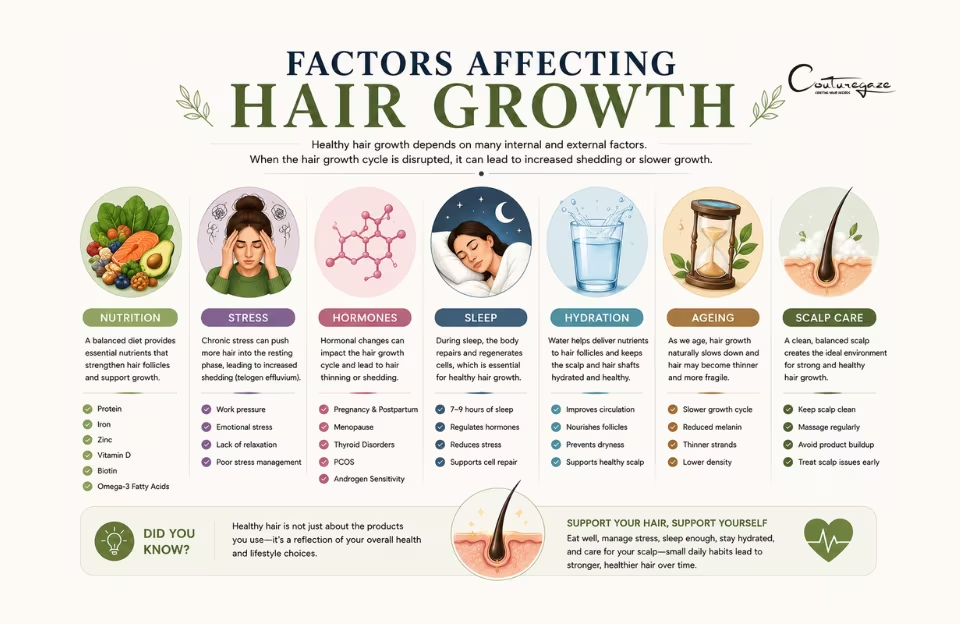
Factors Affecting Hair Growth
Chronic Stress
Long-term physical or emotional stress can push a larger number of hair follicles into the Telogen (resting) phase. This often results in increased shedding several months after the stressful event, a condition known as telogen effluvium.
Managing stress through regular exercise, mindfulness, and adequate rest can support your overall well-being and help maintain a healthy hair cycle.
Poor Nutrition
Your hair follicles are among the body’s most active tissues and require a steady supply of nutrients to function properly.
A diet lacking essential nutrients may contribute to slower hair growth or increased shedding.
Key nutrients include:
- Protein
- Iron
- Zinc
- Vitamin D
- Omega-3 fatty acids
- Vitamin B12
Eating a balanced diet with a variety of whole foods helps provide the building blocks needed for healthy hair.
Hormonal Changes
Hormones play a significant role in regulating the hair growth cycle.
Changes during pregnancy, menopause, thyroid disorders, or conditions such as polycystic ovary syndrome (PCOS) can affect how long hair remains in each stage of the cycle.
If you notice persistent or sudden hair loss alongside other symptoms, it’s worth discussing your concerns with a healthcare professional.
Illness or Surgery
After a major illness, high fever, surgery, or significant physical trauma, temporary hair shedding may occur a few months later.
This is usually temporary, and hair growth often returns to normal as the body recovers.
Ageing
As we age, the Anagen (growth) phase tends to become shorter.
This means:
- Hair grows more slowly.
- Individual strands may become finer.
- Overall hair density can gradually decrease.
While aging cannot be prevented, adopting healthy lifestyle habits may help support hair quality.
Excessive Heat and Chemical Treatments
Frequent use of high-heat styling tools, bleaching, colouring, or chemical straightening doesn’t directly stop hair growth, but it can weaken the hair shaft and increase breakage.
This often creates the impression that hair isn’t growing when, in reality, it’s breaking before it reaches its full length.
For a better understanding of how your hair absorbs and retains moisture, read our guide on Hair Porosity Explained: How to Test Your Hair and Choose the Right Products, which explains how porosity influences hair care routines and product choices.
How to Support Healthy Hair Growth Naturally
Although you can’t dramatically speed up your natural hair growth cycle, you can create the right conditions for healthier, stronger hair.
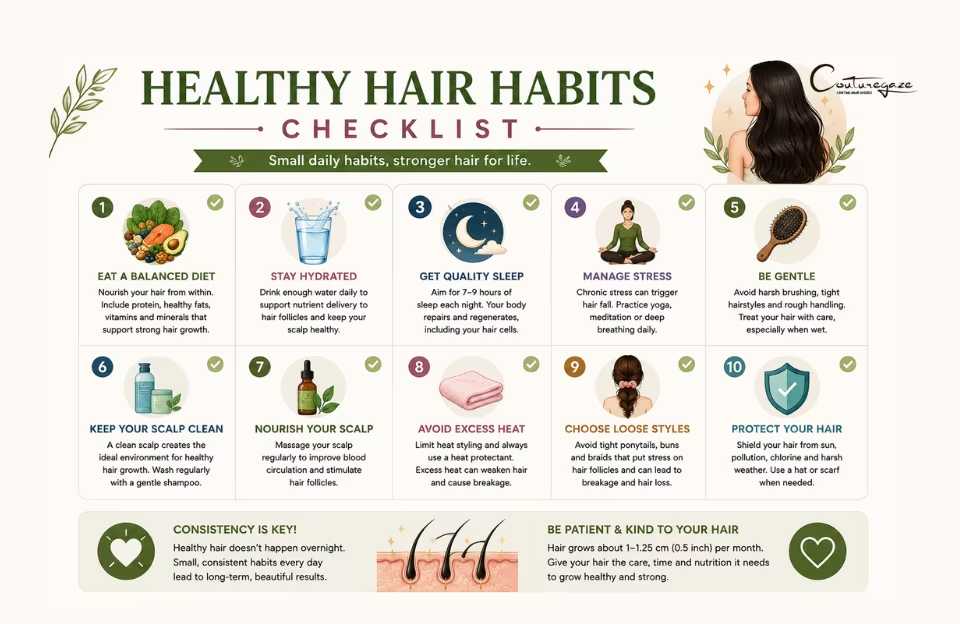
Healthy Hair Habits Checklist
Eat a Balanced Diet
Hair is primarily made of a protein called keratin, so consuming enough protein is essential.
Include foods such as:
- Eggs
- Fish
- Lean meat
- Beans
- Lentils
- Dairy products
- Nuts and seeds
A varied, nutrient-rich diet supports overall hair health.
Stay Hydrated
Hydration plays an important role in maintaining healthy skin and scalp, both of which contribute to a healthy environment for hair growth.
If you’re unsure how much water you should drink each day, try our Water Intake Calculator to estimate your daily hydration needs based on your body and activity level.
Prioritise Quality Sleep
During sleep, your body carries out many repair and recovery processes that support overall health, including the tissues involved in healthy hair growth.
Maintaining a consistent sleep schedule may benefit your general well-being and support healthy hair over time.
If you’re trying to improve your sleep routine, our Sleep Calculator can help you determine the best bedtime or wake-up time based on your preferred sleep duration.
Take Care of Your Scalp
Healthy hair starts with a healthy scalp.
Simple habits include:
- Washing regularly with a shampoo suited to your scalp type.
- Avoiding excessive product build-up.
- Gently massaging the scalp while shampooing.
- Protecting the scalp from prolonged sun exposure.
Be Gentle with Wet Hair
Hair is generally more fragile when it’s wet.
To reduce breakage:
- Use a wide-tooth comb.
- Avoid vigorous towel drying.
- Let hair air-dry when possible.
- Apply heat protection before styling.
Avoid Tight Hairstyles
Frequently wearing tight ponytails, buns, or braids can place repeated tension on hair follicles.
Looser hairstyles help reduce unnecessary stress on both the hair and scalp.
Hair Growth Myths vs Facts
Many hair care tips are shared online, but not all are supported by evidence. Here are some of the most common myths.
| Myth | Fact |
| Cutting your hair makes it grow faster. | Haircuts remove split ends but don’t affect the growth rate inside the follicle. |
| Shampoo can make hair grow overnight. | Shampoo supports scalp health, but no shampoo can dramatically speed up the natural hair growth cycle. |
| Brushing your hair 100 times a day promotes growth. | Excessive brushing may actually increase breakage, especially if hair is fragile. |
| Pulling out one grey hair causes more to grow. | Each follicle produces only one hair, so removing a grey strand doesn’t create additional grey hairs nearby. |
| Hair stops growing after a certain length. | Hair continues to grow during the Anagen phase. Genetics mainly determine how long this phase lasts and therefore your maximum hair length. |
Frequently Asked Questions
- How long does the complete hair growth cycle last?
A full hair growth cycle varies between individuals because the Anagen phase can last anywhere from 2 to 7 years. Including the other stages, a single hair may remain in its life cycle for several years before being replaced.
- How much hair loss is normal each day?
Most healthy adults naturally shed around 50 to 100 hairs per day as part of the Exogen (shedding) phase.
- Can the hair growth cycle be improved?
You can’t completely change your genetically determined hair growth cycle, but maintaining good nutrition, managing stress, getting enough sleep, staying hydrated, and caring for your scalp can support healthier hair growth.
- Why does my hair seem to stop growing?
In many cases, hair hasn’t stopped growing, it may simply be breaking due to heat damage, chemical treatments, or split ends before noticeable length is achieved.
- Does everyone’s hair grow at the same speed?
No. Genetics, age, hormones, health, and lifestyle all influence how quickly hair grows and how long each growth phase lasts.
- Can stress really cause hair loss?
Yes. Significant physical or emotional stress can trigger temporary hair shedding by causing more follicles to enter the resting phase earlier than usual. Hair often recovers once the underlying cause is addressed.
- What’s the difference between hair shedding and hair breakage?
Hair shedding is a normal part of the natural hair growth cycle, while breakage occurs when the hair shaft snaps due to damage or weakness. Understanding the difference can help you choose the right hair care routine.
Conclusion
The hair growth cycle is a remarkable natural process that keeps your hair continuously renewing throughout your life. Every strand follows the same four stages: Anagen, Catagen, Telogen, and Exogen, working together to grow, rest, and replace hair in a balanced cycle.
Understanding these stages can help you recognise the difference between normal daily shedding and potential hair concerns. It also highlights why healthy hair growth takes time and why consistent habits, such as eating a balanced diet, managing stress, staying hydrated, and caring for your scalp, are far more effective than looking for quick fixes.
Remember, healthy hair isn’t just about the products you use, it’s also influenced by your overall health and lifestyle. By supporting your body from the inside out and following a gentle hair care routine, you can create the best environment for stronger, healthier hair over time.
Sources & References
- Healthline. Stages of Hair Growth: Understanding the Hair Growth Cycle.
- Philip Kingsley. Hair Growth Cycle Explained.
- Traya Health – Hair Follicle Growth Cycle Explained
Continue Learning About Healthy Hair
Want to understand your hair even better?
Explore this guides:
Types of Hair and How to Care for Them – Learn how to identify your hair type and build a routine tailored to its unique needs.
How to Improve Hair Texture Naturally – Discover practical, science-backed ways to improve hair texture naturally, reduce dryness and frizz, and achieve softer, smoother, healthier-looking hair.
How to Keep Your Hair Healthy and Beautiful at Home – Learn simple at-home hair care habits, maintenance tips, and expert techniques to keep your hair healthy, strong, shiny, and salon-fresh between appointments.