Why Does Life Feel Busy but Unproductive?
Have you ever finished a long day feeling exhausted but wondering what you actually accomplished?
- Your to-do list was full.
- Your schedule was busy.
- Yet the important tasks somehow remained unfinished.
This is one of the most common struggles people face today.
Modern life moves quickly. Notifications, work responsibilities, personal goals, and daily chores compete for attention. Without a clear system, it’s easy to feel overwhelmed and unorganized.
The truth is that productivity isn’t about working harder. It’s about working smarter with the right structure.
When you learn how to manage time effectively, set meaningful goals, and organize your life, productivity stops feeling stressful and starts feeling natural.
This guide will walk you through a practical productivity blueprint to help you take control of your time, focus on what truly matters, and build habits that support long-term success.
- Why Does Life Feel Busy but Unproductive?
- Why Being Busy All Day Still Feels Unproductive
- The Hidden Psychology Behind Why Productivity Feels So Hard
- Decision Fatigue: Why Small Choices Drain Your Energy
- Cognitive Overload: When Your Brain Has Too Much Open at Once
- Attention Residue: Why Multitasking Kills Focus
- Dopamine Loops and Why Notifications Feel Addictive
- Habit Automation: Why Systems Beat Motivation
- Mental Clutter Quietly Reduces Productivity
- Why Real Productivity Should Feel Calm, Not Chaotic
- Build Your Personal Productivity Blueprint
- Key Strategies for Long-Term Productivity Success
- Tools and Resources to Boost Productivity
- Actionable Tips You Can Apply Today
- Frequently Asked Questions
- Small Systems Create Big Results
Why Being Busy All Day Still Feels Unproductive
One of the biggest productivity myths is the idea that being busy automatically means being productive.
It doesn’t.
A packed schedule can still leave you mentally exhausted, distracted, and strangely unfulfilled by the end of the day.
- You answer emails.
- Reply to messages.
- Attend meetings.
- Switch between tabs.
- Handle small tasks nonstop.
But somehow the work that actually matters keeps getting delayed.
This happens because modern productivity problems are often psychological, not just practical.
Most people are not struggling because they’re lazy. They’re struggling because their attention is constantly fragmented.
Every notification, app switch, unfinished task, and mental reminder quietly drains cognitive energy throughout the day.
And over time, that creates something many people don’t realize they’re experiencing:
mental clutter.
Here are some common productivity challenges many people face:
- Too many tasks and not enough clarity: Your to-do list keeps growing, but you’re not sure which task actually matters the most.
- Poor time management habits: Time slips away because the day isn’t planned properly.
- Unclear or unrealistic goals: Goals feel vague or too big, so it’s hard to know where to start.
- Constant distractions from technology: Phones, notifications, and social media constantly pull your brain into a different direction before you’ve even finished the previous thought.
- Lack of organization in daily life: Daily life feels messy or unorganized, making even simple tasks take longer than they should.
Over time, these small issues add up, leaving you feeling busy all day but not truly productive.
Imagine this situation:
You start your day planning to complete three important tasks. But emails, meetings, and small errands take over. By the end of the day, those tasks are still waiting.
This happens because urgent tasks often replace important ones.
Without a structured approach to time management and goal setting, productivity becomes reactive instead of intentional.
The Hidden Psychology Behind Why Productivity Feels So Hard
Learning productivity isn’t only about managing time.
It’s also about understanding how the brain responds to decisions, distractions, stress, and habits.
Once you understand the psychology behind productivity, it becomes much easier to build systems that actually work in real life.
Decision Fatigue: Why Small Choices Drain Your Energy
Your brain makes thousands of decisions every single day.
- What to wear.
- What to reply.
- What to prioritize.
- What to postpone.
- What to eat.
- What to focus on next.
Even tiny decisions consume mental energy.
This is called decision fatigue.
The more decisions your brain makes throughout the day, the harder it becomes to focus clearly on important tasks later.
That’s why many people feel mentally exhausted before they even begin meaningful work.
It’s also why highly productive people often simplify repetitive decisions through routines and systems.
For example:
- wearing similar outfit styles
- meal prepping
- using calendars consistently
- following fixed morning routines
- planning tasks the night before
These habits reduce unnecessary mental friction.
Because productivity isn’t only about managing time. It’s also about protecting mental energy.
Cognitive Overload: When Your Brain Has Too Much Open at Once
Modern life constantly overloads the brain with information.
- Unread emails.
- Notifications.
- Open tabs.
- Multiple projects.
- Social media updates.
- Half-finished tasks.
Your brain keeps trying to hold everything at the same time.
This creates cognitive overload, where your mind becomes so overstimulated that focus and clarity begin to decline.
And the dangerous part?
Cognitive overload often feels like productivity because you’re constantly “doing something.”
But mentally, your attention becomes scattered.
- You start switching tasks more often.
- You forget small details.
- Simple work takes longer.
- Motivation drops faster.
That’s why productivity systems matter.
Good systems reduce mental load instead of increasing it.
Simple task lists, organized calendars, routines, and structured schedules help your brain stop carrying unnecessary information all day.
Attention Residue: Why Multitasking Kills Focus
Most people think multitasking makes them more efficient.
Research consistently shows the opposite.
Every time you switch between tasks, part of your attention stays stuck on the previous activity.
This is known as attention residue.
For example:
- You’re writing a report.
- A notification appears.
- You reply to a message.
- Then you return to work.
But mentally, a portion of your focus is still attached to the conversation you just had.
That leftover mental residue reduces concentration and makes deep work much harder.
Over time, constant task-switching trains the brain to expect interruption.
And eventually, focusing deeply for even 20–30 minutes starts feeling difficult.
This is why uninterrupted focus sessions are so powerful.
When you protect your attention: work becomes faster, thinking becomes clearer, and productivity feels calmer instead of chaotic.
Dopamine Loops and Why Notifications Feel Addictive
One reason modern productivity feels difficult is because technology constantly competes for attention.
Every notification creates a small dopamine response in the brain.
- A message.
- A like.
- A new email.
- A social media update.
The brain begins craving these tiny stimulation cycles because they provide quick bursts of novelty and reward.
Over time, this creates dopamine loops.
Your brain starts preferring short-term stimulation over long-term focus.
That’s why checking your phone becomes automatic, deep work feels harder, and quiet focus can suddenly feel uncomfortable.
Many people don’t actually have an attention problem.
They have an overstimulation problem.
This is why productive people often:
- Disable notifications,
- Schedule focused work blocks,
- Keep phones away during deep work,
- or Intentionally reduce digital distractions.
Protecting attention is now one of the most important productivity skills in modern life.
Habit Automation: Why Systems Beat Motivation
One of the biggest mistakes people make is relying entirely on motivation.
Motivation changes constantly.
Systems don’t.
Highly productive people usually automate important behaviors through routines and habits.
This is called habit automation.
For example:
- waking up at the same time
- planning tomorrow the night before
- starting focused work at fixed hours
- reviewing goals weekly
- using recurring routines
Over time, these actions stop requiring heavy mental effort because the brain begins performing them automatically.
That’s why strong routines reduce stress.
You stop negotiating with yourself every day.
Instead of asking:
“Should I work out today?”
or
“When should I start working?”
…the decision has already been made by the system you created.
This dramatically reduces procrastination and mental resistance.
Mental Clutter Quietly Reduces Productivity
Many people underestimate how much clutter affects focus.
Mental clutter isn’t only physical mess.
It also includes:
- Unfinished tasks
- Constant reminders
- Disorganized schedules
- A brain juggling ten unfinished thoughts at once rarely feels calm
- Digital chaos
- Unmade decisions
The brain struggles to relax when everything feels mentally “open.”
That’s why organized environments often create calmer thinking.
Simple habits like:
- Cleaning your workspace,
- Organizing your calendar,
- Writing down priorities,
- or Decluttering digital files can significantly improve concentration.
Because productivity isn’t only external.
A large part of productivity is psychological clarity.
Why Real Productivity Should Feel Calm, Not Chaotic
Many people associate productivity with constant hustle.
But sustainable productivity usually feels quieter than that.
It looks like:
- clear priorities
- structured routines
- focused attention
- fewer distractions
- better energy management
- and intentional habits
Real productivity doesn’t mean filling every minute with work.
It means creating systems that help you focus on what actually matters without constantly feeling overwhelmed.
Because ultimately, productivity is less about doing more things…
…and more about creating enough clarity to do the right things consistently.
Build Your Personal Productivity Blueprint
The good news is that productivity can be learned and improved.
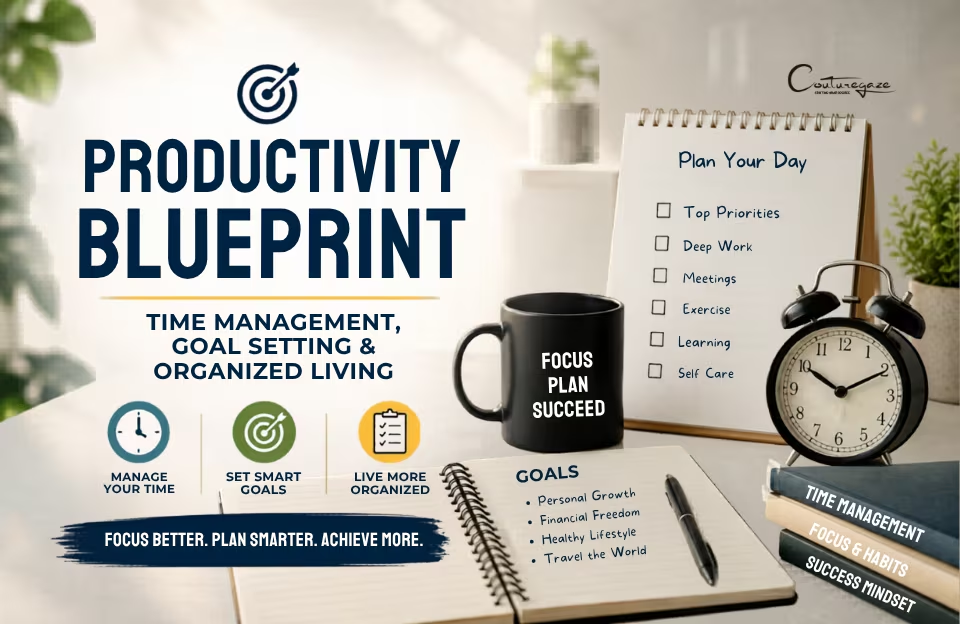
A simple productivity blueprint includes three main pillars:
- Time Management – using your hours intentionally
- Goal Setting – knowing what you are working toward
- Organized Living – creating systems that reduce chaos
When these three areas work together, daily life becomes easier to manage.
Instead of feeling constantly busy, you begin to experience purposeful productivity.
1. Time Management Techniques That Actually Work
Time is the only resource that everyone receives equally.
Most productive people don’t magically have more time. They simply protect their attention better.
Below are some practical time management techniques.
The Time Blocking Method
Time blocking is one of the most effective ways to structure your day.
Instead of reacting to tasks randomly, you assign specific time slots for different activities.
Example daily structure:
- Morning (8:00–10:00) – Deep work
- Late morning (10:00–12:00) – Meetings
- Afternoon (1:00–3:00) – Focus tasks
- Late afternoon (3:00–5:00) – Admin work
Benefits of time blocking:
- Reduces distractions
- Improves focus
- Creates predictable routines
The 80/20 Rule (Pareto Principle)
The 80/20 rule suggests that 80% of results come from 20% of efforts.
This means some tasks create significantly more value than others.
Ask yourself:
- Which tasks move my goals forward the most?
- Which activities produce the biggest impact?
Focus your energy on the high-impact tasks first.
The Two-Minute Rule
If a task takes less than two minutes, do it immediately.
Examples:
- Replying to a quick email
- Scheduling an appointment
- Filing a document
This rule prevents small tasks from building up and creating mental clutter.
The Pomodoro Technique
This technique improves focus through short work sessions.
Structure:
- 25 minutes focused work
- 5 minutes break
- Repeat four times
- Take a longer break after four sessions
This method works well because the brain performs better with structured intervals of effort and rest.
2. Why Most Goals Fail and How to Set Ones You’ll Actually Follow
Many people work hard without clear direction.
Goal setting helps align your daily efforts with meaningful outcomes.
One of the most effective methods is SMART goals.
What Are SMART Goals?
SMART goals are:
- Specific – Clearly defined
- Measurable – Progress can be tracked
- Achievable – Realistic and attainable
- Relevant – Connected to your priorities
- Time-bound – Has a deadline
Example:
Instead of saying:
“I want to be healthier.”
A SMART goal would be:
“I will exercise for 30 minutes, four times a week for the next three months.”
SMART goals make progress clear and measurable.
Breaking Big Goals Into Small Steps
Large goals often feel overwhelming.
The key is to break them into smaller milestones.
Example:
Goal: Write a book
Breakdown:
- Week 1 – Research topic
- Week 2 – Create outline
- Weeks 3-6 – Write chapters
- Week 7 – Edit draft
Each step becomes manageable and measurable.
Research from Psychology Today suggests that clear and measurable goals improve long-term motivation and consistency.
3. The Small Organization Habits That Instantly Reduce Mental Clutter
Organization plays a major role in productivity.
A cluttered environment often leads to mental clutter.
Here are practical ways to organize your life.
Create a Daily Planning System
Spend 10 minutes each evening planning the next day.
Write down:
- Three priority tasks
- Secondary tasks
- Personal activities
This creates a clear roadmap for the day.
Use the “One Home” Rule
Every item should have a designated place.
- Keys → key holder
- Documents → labeled folder
- Clothes → organized wardrobe
This rule reduces wasted time searching for things.
Declutter Regularly
Clutter drains energy and attention.
Try the monthly declutter method:
Review:
- Digital files
- Emails
- Work desk
- Wardrobe
Keep only what adds value.
Organize Digital Life Too
Productivity isn’t only physical.
Digital clutter can also affect focus.
Helpful habits:
- Unsubscribe from unnecessary emails
- Organize folders on your computer
- Use cloud storage for documents
Key Strategies for Long-Term Productivity Success
Short bursts of productivity are easy.
Maintaining productivity for years requires strong habits.
Here are key strategies for long-term success.
Focus on Energy, Not Just Time
Your productivity depends heavily on mindfulness and energy levels.
Protect your energy by prioritizing:
- Sleep
- Exercise
- Mental health
- Healthy meals
- Regular breaks
Without it, even the best productivity system fails. Practicing mindfulness can significantly improve concentration and reduce distractions. If you’re new to the concept, you can read our complete guide on the benefits of mindfulness practices and how to start.
According to Harvard Business Review, constant task-switching and interruptions can significantly reduce productivity and focus.
Build Consistent Routines
Routines reduce decision fatigue.
Example morning routine:
- Wake up
- Exercise
- Review daily goals
- Start focused work
When routines become automatic, productivity becomes easier.
Review Progress Weekly
Set aside 20–30 minutes each week to reflect.
Ask yourself:
- What worked well this week?
- What didn’t work?
- What should I adjust next week?
This review process keeps your system effective.
Tools and Resources to Boost Productivity
Technology can support productivity when used intentionally.
Here are some helpful tools and frameworks.
Task Management Apps
Examples include:
- Todoist
- Notion
- Trello
These tools help organize tasks, projects, and priorities.
Calendar Systems
Using digital calendars helps structure your time.
You can:
- Schedule deep work sessions
- Plan meetings
- Track deadlines
Personal Productivity Calculators
Simple tools can also help improve productivity awareness.
Examples include:
Sleep Calculator: Helps determine ideal sleep cycles for better energy and focus.
Water Intake Calculator: Proper hydration supports concentration and mental clarity.
BMI or Ideal Weight Calculator: Physical health plays a role in long-term productivity and energy levels.
These tools help align health, energy, and productivity.
Actionable Tips You Can Apply Today
Small habits practiced consistently create big long-term results.
If you want to start feeling more productive right away, the good news is that you don’t need a complicated system. A few simple habits can make a big difference in how your day flows.
Try starting with these small steps:
- Write down your top three priorities each morning. This helps you focus on what truly matters instead of getting lost in a long to-do list.
- Use time blocking for important work. Set aside dedicated time where you can work without interruptions.
- Apply the two-minute rule for small tasks. If something takes less than two minutes, do it immediately instead of postponing it.
- Set SMART goals for the week. Clear and realistic goals make it easier to track progress and stay motivated.
- Keep your workspace tidy. A clean and organized environment helps your mind stay focused.
- Review your system every week. Take a few minutes to reflect on what worked well and what needs adjustment.
Remember, productivity isn’t about dramatic changes overnight. Small habits practiced consistently can lead to powerful results over time.
Frequently Asked Questions
- What is the best time management technique?
The best technique depends on your lifestyle, but time blocking and the Pomodoro technique are widely effective for improving focus and productivity.
- How can I organize my life better?
Start by simplifying routines, decluttering your environment, and creating daily planning habits. Organization improves clarity and reduces stress.
- What are SMART goals and why are they important?
SMART goals provide structure to goal setting. They ensure goals are specific, measurable, achievable, relevant, and time-bound.
- How can I stay productive without burnout?
Balance productivity with energy management. Prioritize sleep, take breaks, and avoid overloading your schedule.
- How long does it take to build productivity habits?
Most productivity habits take 3–6 weeks of consistent practice before they become automatic.
- What tools help improve productivity?
Task management apps, digital calendars, productivity planners, and health-related calculators can all support better productivity systems.
Small Systems Create Big Results
Productivity doesn’t come from motivation alone.
It comes from clear systems.
When you combine:
- Effective time management
- Clear SMART goals
- Practical organized life habits
you create a powerful productivity blueprint.
Remember, productivity is not about doing more things.
It’s about doing the right things consistently.
Start with one or two strategies from this guide today. Over time, these small changes will help you organize your life, manage your time better, and move steadily toward your goals.