Let’s Be Honest for a Moment…
Have you ever felt like you’re doing everything right, eating better, trying routines, following wellness tips, yet still feeling tired, overwhelmed, or mentally drained?
You’re not alone.
Modern wellness can feel confusing. One day it’s about productivity, the next it’s about slowing down. Somewhere in between, many people end up exhausted trying to “keep up” with self-care.
Here’s the truth: Wellness isn’t about doing more. It’s about doing what actually works for you.
This guide will help you simplify that.
- Why Most Wellness Routines Don’t Work
- A Holistic, Sustainable Approach
- The 8 Pillars of Holistic Wellness (Simplified & Practical)
- 1. Physical Wellness: Support Your Body, Don’t Punish It
- 2. Emotional Wellness: Feel Fully, Not Perfectly
- 3. Mental Wellness: Create Space for Clarity
- 4. Social Wellness: Choose Depth Over Noise
- 5. Spiritual Wellness: Reconnect With Meaning
- 6. Intellectual Wellness: Keep Your Mind Alive
- 7. Occupational Wellness: Work Without Losing Yourself
- 8. Financial & Environmental Wellness: Stability Is Self-Care
- What Actually Works – Simple Habits That Make a Real Difference
- What to Let Go Of – The Habits That Drain You Without You Noticing
- A Small Step That Changes Everything
- FAQs: What Readers Commonly Ask
- Wrap-Up: Wellness Isn’t Perfection, It’s Alignment
Why Most Wellness Routines Don’t Work
Let’s talk about what’s quietly going wrong.
Most people struggle with:
- Trying to follow too many habits at once
- Feeling guilty for not being “consistent”
- Confusing discipline with burnout
- Constant stress, even during rest
- Information overload from social media
And the biggest issue? Wellness has been turned into a performance instead of a support system.
A Holistic, Sustainable Approach
Instead of chasing trends, focus on what actually improves your daily life.
A balanced lifestyle isn’t built on perfection, it’s built on alignment.
At the core of true well-being are 8 pillars of holistic wellness. When these are in balance, everything else becomes easier, your focus, energy, relationships, and even productivity.
Instead of trying to fix everything at once, what if you focused on the foundation that actually holds everything together?
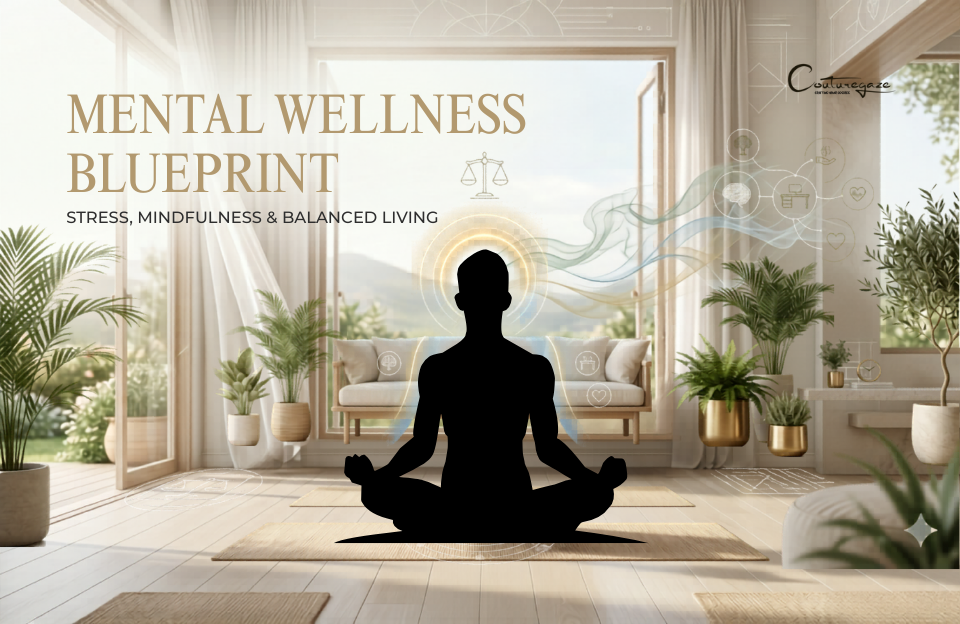
Mental Wellness Blueprint: Build Calm, Clarity & Emotional Strength
Think of this as your reset point. Not a strict routine, but a flexible framework that helps you feel better, think clearer, and live with more balance, without burning out.
The 8 Pillars of Holistic Wellness (Simplified & Practical)
1. Physical Wellness: Support Your Body, Don’t Punish It
Let’s shift this mindset first: Your body doesn’t need punishment, it needs your support.
What Actually Works:
- Consistent movement, not just intense workouts, Move daily (Walking, yoga, play-based exercise, stretching)
- Mindful Eating, Eat real, nourishing food (not restrictive diets)
- Hydration as a daily ritual, Stay hydrated throughout the day
- Prioritize sleep quality (7-9 hours)
- Preventive health check-ups, not reactive care
Pro tip: If you often forget hydration, use a Water Intake Calculator to understand your daily needs.
What to Rethink:
- Skipping meals to “stay productive”
- Overtraining without recovery
- Late-night caffeine and screen exposure
- Overreliance on quick-fix weight loss solutions
- Treating exhaustion as normal
Movement should feel like energy, not pressure.
2. Emotional Wellness: Feel Fully, Not Perfectly
Emotional wellness isn’t about you being positive all the time. It’s about being honest with yourself.
What Helps:
- Journaling as therapy, even 5 minutes a day
- Guided breathwork for stress and anxiety
- Positive affirmations that reshape inner dialogue
- Mental health breaks before burnout
If you’re new to calming practices, start small. Even simple techniques can make a difference—like those in our guide on mindfulness practices for stress and clarity.
What to Rethink:
- Ignoring emotions to “stay strong”
- Negative self-talk disguised as motivation
- Emotional avoidance through distractions
- Expecting yourself to “bounce back” instantly
Feeling your emotions is strength, not weakness.
3. Mental Wellness: Create Space for Clarity
We live in a world of constant stimulation. But clarity doesn’t come from more input, it comes from less noise.
Focus On:
- Digital detox (even 1 hour daily)
- Slow, mindful mornings
- Single-tasking instead of multitasking
Rethink:
- Constant scrolling
- Always being “available”
- Overloading your brain before sleep
- Consuming information without reflection
Mental clarity grows when you subtract, not add.
4. Social Wellness: Choose Depth Over Noise
Human connection is a core wellness nutrient.
Focus On:
- Meaningful, in-person conversations
- Setting boundaries
- Spending time with people who energize you
Rethink:
- Toxic relationships
- Saying “yes” to everything
- Seeking validation online
The right relationships should feel safe, not draining.
5. Spiritual Wellness: Reconnect With Meaning
Spiritual wellness doesn’t require religion, it requires presence.
Focus On:
- Time in nature
- Gratitude practices
- Energy cleansing rituals (like palo santo or mindful decluttering)
- Clarifying personal values
Rethink:
- Hustling without purpose
- Ignoring your intuition
- Treating rest as unproductive
Sometimes, the most productive thing you can do is pause.
6. Intellectual Wellness: Keep Your Mind Alive
Your brain needs stimulation, but the right kind.
Focus On:
- Reading instead of scrolling
- Learning new skills
- Creative hobbies
- idea-journaling
Rethink:
- Passive content consumption
- Filling every quiet moment with noise
Curiosity keeps your mind sharp and engaged.
7. Occupational Wellness: Work Without Losing Yourself
Work should support your life, not consume it.
Focus On:
- Setting boundaries
- Taking breaks
- Aligning work with purpose
- Hybrid work-life balance
Rethink:
- Hustle culture
- Overworking without rest
Rest is not a reward. It’s a requirement.
8. Financial & Environmental Wellness: Stability Is Self-Care
Money and environment affect your mental state more than you realize.
Focus On:
- Budgeting and mindful spending
- Decluttered, calm spaces
- Sustainable living
Rethink:
- Impulse buying
- Living beyond your means
- Ignoring financial stress signals
A calm environment creates a calm mind.
What Actually Works – Simple Habits That Make a Real Difference
Let’s be honest, most of us don’t struggle because we lack discipline. We struggle because we’re trying to do too much at once.
The truth is simple: You don’t need a perfect routine. You need a few habits that actually you don’t need a perfect routine. You need a few habits that support you and the awareness to let go of what drains you.
Instead of separating “good” and “bad” habits, let’s look at real-life shifts that make a difference.
Small Shifts That Change How You Feel Every Day
- Choose fresh air over endless scrolling
A short walk, a little sunlight, or even a quiet moment outside can reset your mind faster than staying glued to your screen. - Create one intentional pause in your day
Not every moment needs input. A screen-free coffee, a quiet evening, or even 10 minutes of stillness can calm your mind more than you expect. - Get thoughts out of your head and onto paper
When everything stays in your mind, it feels heavier. Writing things down, even messily, creates space and clarity. - Respect your sleep like it actually matters
Because it does. Your mood, focus, and energy all depend on it. If your schedule feels off, tools like a Sleep Calculator can help you reset your rhythm. - Move in ways that feel natural, not forced
You don’t need intense workouts every day. Sometimes a walk, stretching, or dancing is enough to shift your energy. - Be more intentional with your time and energy
Every “yes” has a cost. Learning when to pause or say no isn’t selfish, it’s how you protect your well-being.
What to Let Go Of – The Habits That Drain You Without You Noticing
Here’s something most people don’t realize. Sometimes the biggest upgrade to your life isn’t adding more habits, it’s removing the ones quietly exhausting you.
Take a moment and reflect… How many of these feel familiar?
- Working non-stop without real breaks
It might feel productive, but it slowly drains your energy and focus. - Living in constant notification mode
Every ping pulls your attention away and keeps your mind in a state of stress. - Scrolling without intention and Oversharing Online
What starts as “just 5 minutes” often ends with mental fatigue and comparison, Privacy protects your emotional energy and promotes inner fulfilment. So avoid oversharing. - Being too hard on yourself
That inner voice matters. And if it’s always critical, it becomes exhausting. Harsh self-talk drains more energy than any task ever will - Saying yes when you actually want to say no
Overcommitting doesn’t just take time, it takes your energy too.
Here’s a simple rule to remember, If something consistently leaves you feeling drained instead of better, it’s worth rethinking.
A Small Step That Changes Everything
You don’t need a complete life overhaul.
Sometimes, it’s just:
- One less distraction
- One better habit
- One honest boundary
That’s where real change begins.
Check out Tools That Support Your Health and Wellness Journey
FAQs: What Readers Commonly Ask
1. How do I start a wellness routine without feeling overwhelmed?
Start with one habit, like hydration or sleep. Build slowly, Consistency builds confidence.
2. Is digital detox really necessary?
Yes, especially for mental clarity, sleep quality, and emotional regulation.
3. How long does it take to feel a difference?
Many people notice changes within 1–2 weeks of consistent effort.
4. What’s the biggest wellness mistake people make?
Trying to change everything at once and quitting when it feels hard.
5. What is the most important part of wellness?
Consistency. Small habits matter more than perfect routines.
6. Can I improve mental health without expensive tools?
Yes. Walking, journaling, sleep, and boundaries are free and effective.
7. Is mindfulness necessary for wellness?
It’s not mandatory, but it’s one of the simplest ways to reduce stress and improve focus.
Wrap-Up: Wellness Isn’t Perfection, It’s Alignment
Wellness isn’t about doing everything right, it’s about doing what feels right for you.
You don’t need a perfect routine, expensive habits, extreme discipline
You need awareness, balance, kindness, consistency, and an intentional relationship with yourself.
Wellness isn’t about fixing yourself, It’s about finally taking care of yourself in a way that feels natural and sustainable.
Start small. Stay consistent. And most importantly, be kind to yourself along the way.