
Dark circles under the eyes are one of the most common beauty and skincare concerns today. Whether you’re a student juggling late-night study sessions, a working professional managing a busy schedule, or a new parent running on little sleep, dark circles can make you look tired, stressed, and older than you really are.
However, the truth is that lack of sleep isn’t the only reason people struggle with under-eye darkness. Genetics, allergies, dehydration, excessive screen time, aging, and certain health conditions can all contribute to dark circles. That’s why simply sleeping more doesn’t always solve the problem.
To truly get rid of dark circles, it’s important to understand what’s causing them in the first place. Once you identify the root cause, you can choose the right treatments, lifestyle changes, and skincare solutions to brighten the under-eye area and restore a fresh, well-rested appearance.
In this blog How to Prevent and Get Rid of Dark Circles Under Eyes, we’ll cover:
- What Are Dark Circles Under Your Eyes?
- Types of Dark Circles:
- Why Do Children Have Dark Circles Under Their Eyes?
- Causes of Dark Circles in Adults
- Common Misconceptions About Dark Circles
- How to Prevent Dark Circles Under Eyes
- Medical Options for Persistent Dark Circles
- Best Skincare Ingredients to Prevent or Get Rid of Dark Circles
- Frequently Asked Questions About Dark Circles Under Eyes
- Wrap-Up: Long-Term Strategies That Really Work
- Final Thoughts: Take Charge of Your Under-Eye Health
This guide is designed to help you understand the real causes of dark circles and show you how to get rid of dark circles effectively using the right treatments, skincare habits, and lifestyle changes.
What Are Dark Circles Under Your Eyes?
Dark circles under the eyes, medically known as periorbital hyperpigmentation, refer to the darkened skin beneath the lower eyelids. They may appear as shadows, bluish or purplish discoloration, or brown patches, depending on your skin tone and the underlying cause.
While dark circles are usually not a medical concern, they can significantly impact your appearance and self-confidence. In some cases, they may also signal lifestyle issues such as lack of sleep, dehydration, excessive screen time, or underlying health factors that deserve attention. Understanding what causes dark circles is the first step toward treating them effectively and achieving brighter, healthier-looking under-eyes.
Types of Dark Circles:
Not all dark circles are the same, which is why treatments that work for one person may not work for another. Identifying the type of dark circles you have is essential if you want to get rid of dark circles effectively and prevent them from returning.
- Pigmented Dark Circles: These dark circles are caused by excess melanin production and often appear brown or dark. They are more common in people with medium to darker skin tones and can be triggered by sun exposure, genetics, or frequent eye rubbing.
- Vascular Dark Circles: Vascular dark circles appear bluish or purplish and are usually caused by poor blood circulation or visible blood vessels beneath thin under-eye skin. Fatigue, lack of sleep, and aging often make this type more noticeable.
- Structural Dark Circles: Structural dark circles occur when hollow under-eye areas or tear troughs create shadows, making the under-eyes look darker. This type is often related to aging, facial structure, or volume loss rather than pigmentation.
- Mixed Type: Many people experience a combination of these factors. Mixed dark circles involve pigmentation, vascular concerns, and structural shadows, requiring a more targeted and multi-step approach to treatment.
Why Do Children Have Dark Circles Under Their Eyes?
It can be worrying for parents to notice dark circles under their baby’s or child’s eyes. While they may look concerning at first, dark circles in children are usually harmless and often linked to common lifestyle or genetic factors rather than serious health issues.
Common Causes in Children:
- Allergies: One of the most common reasons children develop dark circles is allergies. Nasal congestion can slow blood flow around the eyes, causing veins to appear darker. These are often referred to as “allergic shiners.”
- Genetics: Some children naturally inherit thinner under-eye skin or increased pigmentation in this area. If dark circles run in the family, they may appear early in childhood and are usually nothing to worry about.
- Lack of sleep: Children need consistent, quality sleep for healthy growth. Irregular sleep routines or insufficient rest can temporarily make dark circles more noticeable.
- Nutritional deficiencies: Low levels of iron, vitamin B12, or an unbalanced diet can contribute to under-eye darkness. Proper nutrition plays an important role in skin health and overall well-being.
- Dehydration: Not drinking enough water can cause the skin under the eyes to look dull and sunken, making dark circles more visible.
If your child has persistent or worsening dark circles, it’s best to consult a pediatrician. A healthcare professional can help rule out allergies, nutritional deficiencies, or other underlying concerns and guide you on the next steps.
Causes of Dark Circles in Adults
Dark circles in adults are often multi-factorial, meaning they usually result from a combination of internal and external factors rather than a single cause. Understanding what’s contributing to your under-eye darkness is essential if you want to get rid of dark circles effectively and prevent them from returning.
- Thin Under-Eye Skin & Aging
As we age, the skin naturally becomes thinner and loses collagen and fat. This makes blood vessels more visible and deepens hollow areas known as tear troughs, creating the appearance of dark circles. - Genetics & Ethnic Predisposition
Family history plays a major role in under-eye pigmentation. People with darker skin tones or a genetic tendency toward hyperpigmentation are more likely to develop visible dark circles. - Fatigue, Sleep Deprivation & Fluid Retention
Lack of sleep cycles is one of the biggest causes of dark circles which can cause the skin to appear pale and dull, making dark circles more prominent. Fluid retention can also lead to puffiness, which casts shadows under the eyes and worsens discoloration. - Allergies & Eye Rubbing
Allergic reactions trigger histamine release, which dilates blood vessels and increases darkness under the eyes. Frequent eye rubbing further irritates the delicate skin, worsening pigmentation and inflammation. - Sun Exposure & Hyperpigmentation
Prolonged sun exposure stimulates melanin production, especially in melanin-rich skin, leading to darker under-eye areas over time. - Dehydration & Lifestyle Factors (Smoking, Alcohol, Stress)
Dehydrated skin looks dull and sunken, making dark circles more noticeable. Smoking, excessive alcohol consumption, and chronic stress impair blood circulation and collagen production, accelerating under-eye aging. - Underlying Health Issues (Anemia, Dermatitis, Eczema)
Medical issues such as anemia, eczema, dermatitis, or other skin conditions can contribute to persistent dark circles and should not be ignored. - Prolonged screen time
Extended screen exposure strains the eyes and reduces blood circulation, which can intensify under-eye discoloration. - Nutrient deficiencies
Low levels of iron, vitamin C, and vitamin K can affect skin health and blood circulation, making dark circles more pronounced.
Common Misconceptions About Dark Circles
Dark circles are often misunderstood, and many myths can make it harder to get rid of dark circles effectively. Let’s clear up some of the most common misconceptions:
Myth: Dark circles are caused only by lack of sleep.
Reality: While poor sleep can make dark circles more noticeable, they are also commonly caused by genetics, allergies, sun exposure, and thinning under-eye skin.
Myth: Dark circles are purely a cosmetic concern.
Reality: In some cases, dark circles may indicate underlying issues such as allergies, anemia, or nutritional deficiencies that need attention.
Myth: Expensive eye creams are the only solution.
Reality: High-priced products aren’t always necessary. Simple lifestyle changes, proper hydration, sun protection, and natural remedies often deliver better and longer-lasting results.
Myth: Children should not have dark circles.
Reality: Dark circles can appear in children due to genetics, allergies, lack of sleep, or nutritional factors and are usually harmless.
How to Prevent Dark Circles Under Eyes
When it comes to under-eye concerns, prevention is always better than treatment. Simple daily habits can go a long way in helping you get rid of dark circles before they become more noticeable or persistent.
- Get enough quality sleep
Aim for 7-9 hours of restful sleep each night for adults and 9–12 hours for children. Consistent sleep schedules help reduce under-eye shadows, puffiness, and fatigue-related discoloration. - Stay Well Hydrated
Drinking at least 8 glasses of water daily keeps your skin plump and healthy, preventing the sunken appearance that makes dark circles stand out. - Follow a nutrient-rich diet
Include foods rich in iron, vitamin C, vitamin K, and antioxidants. These nutrients support healthy blood circulation, collagen production, and skin repair. - Use sunscreen
Applying sunscreen around the eyes (or wearing sunglasses) helps prevent UV-induced pigmentation and premature aging of the delicate under-eye skin. - Limit screen time
Excessive screen exposure strains the eyes and worsens discoloration. Take regular breaks using the 20-20-20 rule to reduce eye fatigue. - Manage allergies
Allergies can cause inflammation and darkening under the eyes. Consult a healthcare professional to manage symptoms safely and effectively. - Avoid smoking and excessive alcohol
Smoking and alcohol weaken blood circulation and collagen, accelerating skin aging and worsening dark circles. - Follow a Gentle Skincare Routine
Use mild cleansers and nourishing under-eye creams containing ingredients like caffeine or hyaluronic acid to hydrate, depuff, and brighten the under-eye area.
7 Effective Home Remedies to Reduce Dark Circles
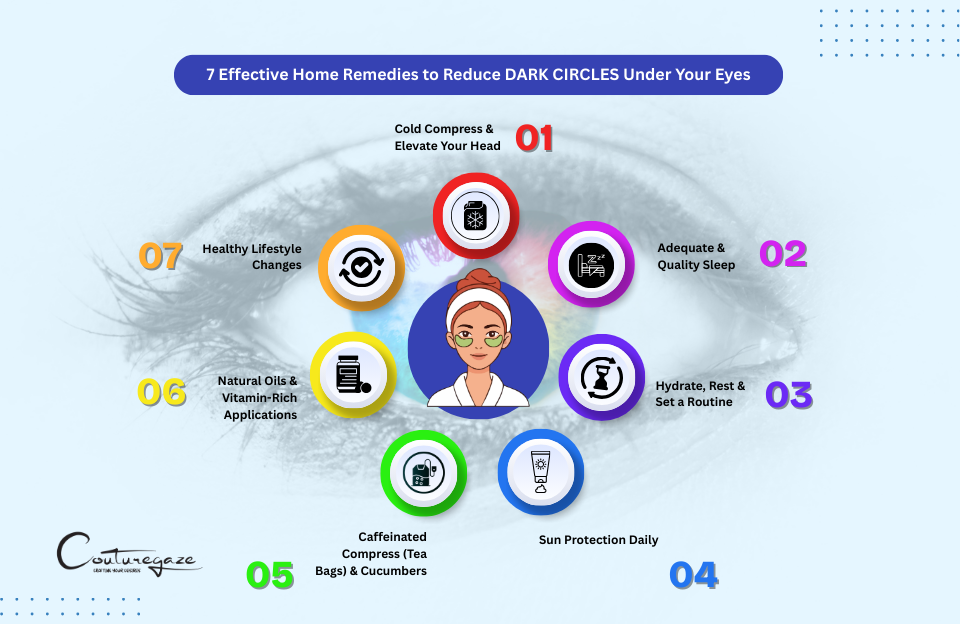
If you’re looking for natural and affordable ways to get rid of dark circles, home remedies can be surprisingly effective when practiced consistently. These simple methods help improve circulation, reduce puffiness, and brighten the under-eye area over time.
1. Cold Compress & Elevate Your Head
Applying a cold wet cloth such as a chilled washcloth, cold spoons, or wrapped frozen peas for 10-20 minutes helps constrict blood vessels and reduce swelling. Sleeping with your head slightly elevated can also prevent fluid buildup under the eyes.
2. Adequate & Quality Sleep
Aim for 7-9 hours of uninterrupted sleep each night. Quality rest allows your skin to repair itself, reducing under-eye puffiness and discoloration. Use our Sleep Calculator to align your bedtime with natural sleep rhythms.
3. Stay Hydrated, Rest and Maintain a Routine
Drinking plenty of water and eating fresh fruits and vegetables keep your skin hydrated and healthy. Establishing a consistent sleep schedule further supports brighter, well-rested-looking eyes. Calculate how much water your body actually needs using our Water Intake Calculator to stay hydrated.
4. Use Daily Sun Protection
Apply a broad-spectrum facial sunscreen with SPF 30 or higher and wear UV-protective sunglasses, even on cloudy days to prevent pigmentation and premature aging under the eyes.
5. Caffeinated Compress (Tea Bags) & Cucumbers
Place cooled green or black tea bags, or fresh cucumber slices, over your eyes for 10-15 minutes. Caffeine helps reduce puffiness, while cucumbers soothe and refresh tired eyes.
6. Apply Natural Oils and Vitamin-Rich Ingredients
Gently massage almond oil, rosewater, or aloe vera under the eyes before bedtime to hydrate, calm the skin, and improve texture over time.
7. Make Healthy Lifestyle Changes
Reducing alcohol intake, quitting smoking, managing stress, and practicing relaxation techniques such as meditation or deep breathing can improve circulation and overall skin tone.
Medical Options for Persistent Dark Circles
When lifestyle changes and home remedies don’t deliver the desired results, professional dermatological treatments may be needed to get rid of dark circles more effectively. These options target pigmentation, volume loss, and skin texture and should always be performed or recommended by qualified medical professionals.
- Topical Treatments with Active Ingredients
Dermatologist-recommended creams and serums containing ingredients like caffeine, vitamin C, kojic acid, or vitamin K can help reduce pigmentation, improve circulation, and boost under-eye skin vitality over time. - Chemical Peels and Laser Therapy
Chemical peels help exfoliate pigmented skin and promote cell renewal, while laser treatments target discoloration, stimulate collagen production, and tighten the under-eye area for a smoother appearance. - Injectables and Surgical Options
Loss of volume or prominent under-eye hollows can be treated with dermal fillers or platelet-rich plasma (PRP) injections to restore fullness and improve skin quality. In cases of severe puffiness or excess skin, eyelid surgery (blepharoplasty) may be recommended by a specialist. - Microneedling & PRP therapy
Microneedling, often combined with PRP therapy, stimulates collagen production and improves skin texture, making dark circles less noticeable over time.
Always patch-test new skincare products, follow professional guidance for injectables or laser treatments, and avoid self-medicating with harsh chemicals around the delicate under-eye area. Safety and consistency are key to achieving long-term results without causing irritation or damage.
Best Skincare Ingredients to Prevent or Get Rid of Dark Circles
Choosing the right skincare ingredients can make a big difference when you’re trying to prevent or get rid of dark circles. Look for products that target pigmentation, boost circulation, strengthen delicate skin, and improve hydration. Here are some of the most effective ingredients dermatologists recommend:
1. Caffeine
Caffeine helps constrict blood vessels and reduce puffiness, making the under-eye area look brighter and less shadowed. It also supports circulation, which can diminish the appearance of dark circles over time.
2. Vitamin C
A powerful antioxidant, vitamin C helps lighten hyperpigmentation and protect delicate skin from environmental damage. Regular use can visibly brighten under-eye darkness and improve overall skin tone.
3. Hyaluronic Acid
Hyaluronic acid intensely hydrates the skin, plumping up fine lines and making dark circles less noticeable. It’s especially helpful for dry or dehydrated under-eye skin.
4. Retinol
Retinol boosts collagen production, improving skin thickness and elasticity. This helps reduce the appearance of shadows caused by thin under-eye skin, but use it cautiously and always with sunscreen, as it can increase sensitivity.
5. Vitamin K
Vitamin K supports healthy blood circulation and can help reduce the blue or purple tones often seen in vascular dark circles. It’s frequently combined with other brightening ingredients for added benefits.
6. Niacinamide (Vitamin B3)
Niacinamide promotes an even skin tone, strengthens the skin barrier, and helps reduce inflammation and discoloration. It’s gentle enough even for sensitive under-eye areas.
7. Kojic Acid
Derived from fungi, kojic acid helps reduce melanin production and lighten pigmentation. It’s effective in treating brown or pigmented under-eye circles when used carefully.
8. Peptides
Peptides support collagen production and help improve skin firmness and resilience. This can reduce sagging and shadowing under the eyes, resulting in a smoother, more youthful look.
9. Aloe Vera
Aloe vera soothes and hydrates, calming irritation and reducing the look of tired, inflamed skin. While gentle, it’s a great complementary ingredient for sensitive under-eye skin.
Frequently Asked Questions About Dark Circles Under Eyes
Q: Can lack of sleep alone cause dark circles?
A: Not always. While sleep deprivation can make dark circles more noticeable, genetics, aging, allergies, and lifestyle factors are often the main contributors.
Q: How do I permanently get rid of dark circles?
A: Permanently getting rid of dark circles usually requires a combination of lifestyle changes, consistent skincare, and, in some cases, professional treatments. Genetics and skin type also influence results.
Q: Do dark circles go away naturally?
A: Yes, if they’re caused by temporary factors like fatigue, dehydration, or mild stress. Chronic causes such as genetics or structural issues may require targeted treatment.
Q: Why do kids get dark circles?
A: Dark circles in children are commonly caused by genetics, allergies, or irregular sleep patterns. Most cases are harmless but can be managed with better sleep and hydration.
Q: What vitamin deficiency causes dark circles?
A: Deficiency in iron, vitamin B12, vitamin C, and vitamin K is linked with dark circles.
Q: Are dark circles a sign of illness?
A: Sometimes. Persistent dark circles can be linked to conditions like anemia, thyroid problems, or chronic allergies. If they are sudden, painful, or asymmetrical, consult a doctor.
Q: Can dark circles be completely removed?
A: Many dark circles can be minimized or managed through lifestyle changes, skincare, or professional treatments. Complete removal depends on individual factors such as genetics, skin tone, and underlying causes.
Q: Are dark circles a medical concern?
A: Usually not. Dark circles are mostly cosmetic, but persistent, painful, or unusual discoloration should be evaluated by a healthcare professional.
Q: What vitamins help reduce dark circles?
A: Vitamins K, C, E, B12, and iron supplementation (if deficient) can help improve circulation and reduce pigmentation under the eyes.
Q: Do concealers or makeup work instantly?
A: Yes, makeup provides an instant cosmetic solution to mask dark circles, but it does not address the underlying causes.
Wrap-Up: Long-Term Strategies That Really Work
While temporary fixes like concealers or cold compresses help in the short term, long-lasting results come from consistent care and healthy habits. Here’s a simple guide to get rid of dark circles and maintain brighter, well-rested-looking eyes over time:
| Strategy | What It Does |
| Improve Sleep & Hydration | Adequate sleep and proper hydration reduce discoloration and under-eye puffiness. |
| Use Cold Compresses | Cold compresses constrict blood vessels, reduce swelling, and refresh tired eyes. |
| Apply Sunscreen Daily | Protecting the under-eye area from UV rays prevents pigmentation and premature aging. |
| Regular Facial Care | Natural oils and gentle skincare soothe the skin, reduce inflammation, and maintain elasticity. |
| Healthy Lifestyle Choices | Limiting smoking, alcohol, and stress improves circulation and skin health. |
| Medical Procedures (if needed) | For persistent or structural dark circles, dermatological treatments can address pigmentation, volume loss, and aging-related changes. |
By combining these strategies with healthy habits, skincare, and if necessary, professional treatments, you can significantly reduce dark circles and prevent them from returning. Consistency is key, and small daily improvements often lead to the most noticeable long-term results.
Final Thoughts: Take Charge of Your Under-Eye Health
Remember consistent lifestyle habits, proper sleep, hydration, and a balanced diet are your best defense against dark circles.
Healthy eyes are a reflection of a healthy lifestyle!
Dark circles under the eyes may not be medically dangerous, but they can affect your confidence and your overall appearance. Understanding their causes, prevention strategies, and available treatments options is the first step to getting rid of dark circles for good and taking control of your under-eye health.
Remember, the most effective long-term solutions start with consistent lifestyle habits:
- Prioritize quality sleep every night
- Stay properly hydrated
- Eat a nutrient-rich, balanced diet
- Protect your skin from sun damage
- Manage stress and reduce habits like smoking or excessive alcohol
For more persistent or stubborn dark circles, dermatologists provide safe and effective treatments, ranging from targeted skincare to professional procedures that improve pigmentation, circulation, and under-eye volume.
At the end of the day, bright, healthy-looking eyes are a reflection of an overall healthy lifestyle. With patience, care, and the right strategies, you can significantly reduce dark circles and restore a fresher, more youthful appearance.
Your health and safety should always come first.
This blog is for informational purposes only and is not a substitute for professional medical advice. Results from home remedies, skincare, or medical treatments to get rid of dark circles may vary depending on individual factors such as age, skin type, genetics, health conditions, and lifestyle.
Consult a healthcare professional or dermatologist for persistent, severe, or unusual dark circles, and avoid self-medicating or using harsh products around the delicate under-eye area. The author and publisher are not responsible for any adverse effects from applying the information provided.