Have you ever bought a shampoo that everyone raved about, only to find it made your hair feel greasy, dry, or weighed down? Or maybe your friend uses the exact same conditioner and ends up with shiny, soft hair while yours still feels frizzy.
The difference may not be your hair type, it could be your hair porosity.
Hair porosity determines how easily your hair absorbs and retains moisture. Understanding it can completely change the way you care for your hair, helping you choose products that actually work instead of wasting money on those that don’t.
Whether your hair is straight, wavy, curly, or coily, knowing your porosity level makes it easier to create a routine that supports healthier, stronger, and more manageable hair.
In this guide, you’ll learn:
- What hair porosity really means
- How to identify your porosity level
- The most reliable ways to test it at home
- The best ingredients for each porosity type
- Common mistakes to avoid
- How to build a routine that works for your hair
By the end, you’ll have a much clearer understanding of why your hair behaves the way it does and what to do about it.
- What Is Hair Porosity?
- Why Hair Porosity Matters
- Hair Porosity vs Hair Type vs Hair Texture
- What Determines Hair Porosity?
- Can Hair Porosity Change?
- The Three Hair Porosity Types
- Quick comparison on the Tests
- Which Hair Porosity Do You Have?
- Best Hair Care Routine for Low Porosity Hair
- Best Hair Care Routine for Medium Porosity Hair
- Best Hair Care Routine for High Porosity Hair
- Best Ingredients by Hair Porosity
- Common Hair Porosity Mistakes
- Hair Porosity Myths vs Facts
- Expert Tips for Healthier Hair Regardless of Porosity
- Frequently Asked Questions
- Key Takeaways
- Conclusion
What Is Hair Porosity?
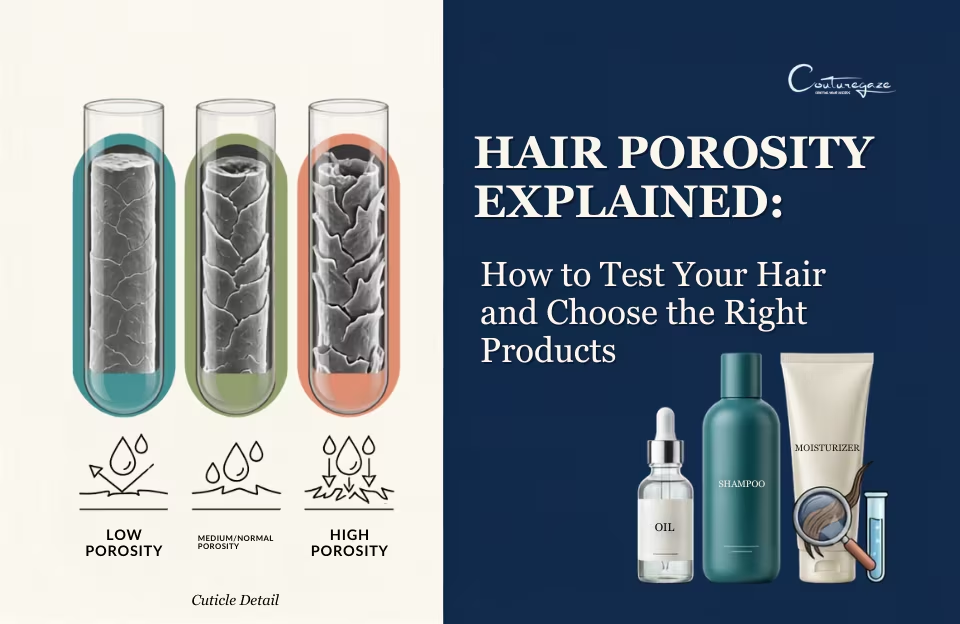
Hair porosity refers to your hair’s ability to absorb and retain moisture. It depends on how open or tightly closed the outer layer of the hair, known as the cuticle, is. Hair is generally classified as low, medium, or high porosity, and each type requires a different approach to care.
Think of each strand of hair like a pinecone.
The outer layer, called the cuticle, is made up of tiny overlapping scales.
- When these scales lie flat and tightly packed, moisture has a harder time entering the hair.
- When they’re slightly raised, moisture moves in and out at a balanced rate.
- When they’re lifted or damaged, water enters quickly but escapes just as fast.
This is why two people with the same hair type can have completely different experiences using the same products.
One person’s hair may absorb conditioner instantly, while another’s seems to repel it.
The difference often comes down to porosity, not hair type.
Why Hair Porosity Matters
Understanding your hair porosity can help you:
- Choose products that suit your hair.
- Avoid buildup from products that are too heavy.
- Improve moisture retention.
- Reduce dryness and frizz.
- Prevent unnecessary breakage.
- Save money by avoiding products that don’t meet your hair’s needs.
Instead of buying products based on trends, you’ll know exactly what your hair is asking for.
Hair Porosity vs Hair Type vs Hair Texture
Many people confuse these three terms, but they describe completely different characteristics of your hair.
| Feature | What It Describes | Examples |
| Hair Type | The natural pattern of your hair | Straight, Wavy, Curly, Coily |
| Hair Texture | The thickness of individual strands | Fine, Medium, Coarse |
| Hair Porosity | How well hair absorbs and retains moisture | Low, Medium, High |
For example:
You might have:
- Curly hair
- Fine strands
- High porosity
Or:
- Straight hair
- Coarse strands
- Low porosity
These characteristics work together but are completely independent of one another.
If you’re still unsure about your natural hair type, check out our Types of Hair and How to Care for Them: The Complete Guide, where we explain the different hair types and how to care for each one.
What Determines Hair Porosity?
Hair porosity is influenced by both genetics and external factors.
Some people are naturally born with low or high porosity hair, while others develop changes over time due to damage or chemical treatments.
Common factors include:
- Genetics
Natural porosity is largely inherited.
Some people naturally have tightly packed cuticles, while others have more open cuticles.
- Heat Styling
Frequent use of:
- Flat irons
- Curling wands
- Blow dryers
can gradually weaken the cuticle, increasing porosity.
- Chemical Treatments
- Bleaching
- Hair coloring
- Perms
- Relaxers
- Keratin treatments
These processes can alter the hair’s structure and affect how moisture moves through the cuticle.
- Environmental Exposure
Daily exposure to:
- UV rays
- Wind
- Salt water
- Chlorine
- Pollution
can slowly wear down the protective outer layer of the hair.
- Mechanical Damage
Simple habits can also affect porosity over time, including:
- Aggressive towel drying
- Rough brushing
- Tight hairstyles
- Sleeping on rough pillowcases
These small sources of friction can gradually lift or damage the cuticle.
Can Hair Porosity Change?
This is one of the most common questions people ask.
Yes, but only to an extent.
Your natural porosity is influenced by genetics and cannot be permanently changed.
However, the condition of your hair can temporarily alter how porous it behaves.
For example:
- Bleaching often increases porosity.
- Heat damage can make hair lose moisture more quickly.
- Deep conditioning treatments may temporarily smooth the cuticle, helping hair retain moisture more effectively.
In other words, while you can’t permanently transform naturally low-porosity hair into high-porosity hair (or vice versa), you can improve how healthy your hair behaves with the right care.
The Three Hair Porosity Types
1. Low Porosity Hair
Low porosity hair has tightly packed cuticles that resist moisture entering the hair shaft.
Common Signs
- Water tends to bead on the surface.
- Hair takes a long time to get fully wet.
- Products often sit on top of the hair.
- Hair dries slowly after washing.
- Product buildup happens easily.
Advantages
- Stronger natural protection.
- Less moisture loss.
- Better resistance to environmental damage.
Challenges
- Difficult to moisturize.
- Heavy products can make hair greasy.
- Deep conditioning often requires gentle heat for better absorption.
2. Medium Porosity Hair
Often considered the “balanced” porosity type.
The cuticles are slightly open, allowing moisture to move in and out at a healthy rate.
Common Signs
- Hair absorbs products well.
- Hair dries at a moderate speed.
- Holds styles effectively.
- Requires less maintenance.
Advantages
- Easier to manage.
- Healthy moisture balance.
- Less product buildup.
Challenges
Although medium porosity hair is generally the easiest to maintain, excessive heat or chemical treatments can gradually increase porosity over time.
3. High Porosity Hair
High porosity hair has cuticles that are more open than normal.
Moisture enters easily, but escapes just as quickly.
Common Signs
- Hair gets wet almost immediately
- Dries very quickly
- Becomes frizzy in humid weather
- Tangles easily
- Ends often feel dry
- Breakage is more common.
Advantages
- Absorbs treatments quickly.
- Deep conditioning works well.
Challenges
- Loses moisture rapidly.
- Requires frequent hydration.
- More vulnerable to damage.
How to Test Your Hair Porosity at Home
There isn’t a single test that can accurately determine your hair porosity. In fact, hair care professionals often look at how your hair behaves over time rather than relying on one quick experiment.
The best approach is to combine several simple observations to build a more complete picture.
1. The Spray Bottle Test (Most Reliable)
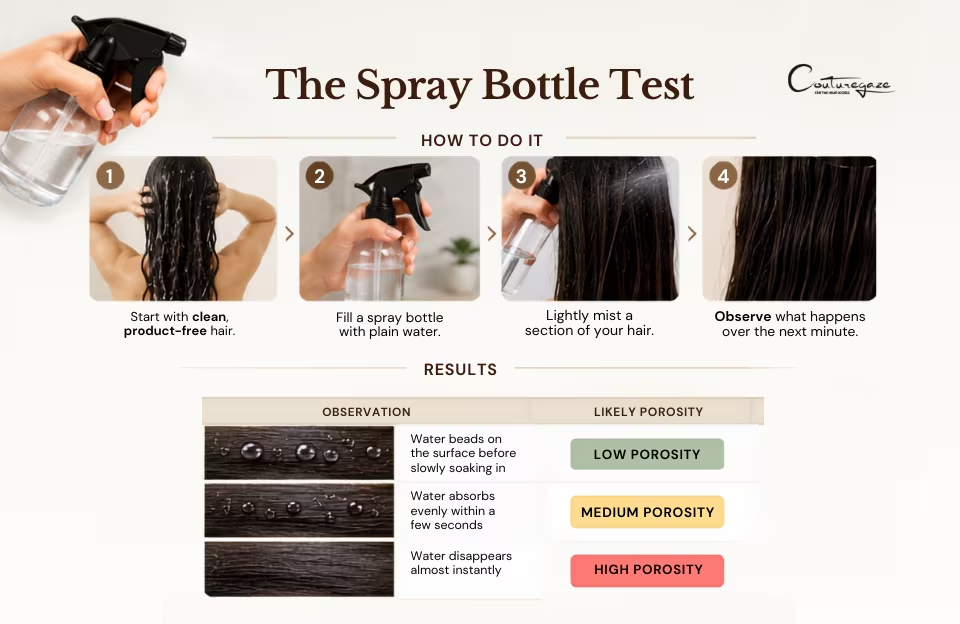
This is one of the easiest and most practical ways to understand your hair’s porosity.
How to do it
- Start with clean, product-free hair.
- Fill a spray bottle with plain water.
- Lightly mist a section of your hair.
- Observe what happens over the next minute.
Results
| Observation | Likely Porosity |
| Water beads on the surface before slowly soaking in | Low Porosity |
| Water absorbs evenly within a few seconds | Medium Porosity |
| Water disappears almost instantly | High Porosity |
Why it works: It mimics how your hair interacts with moisture in everyday life.
2. The Slip and Slide Test
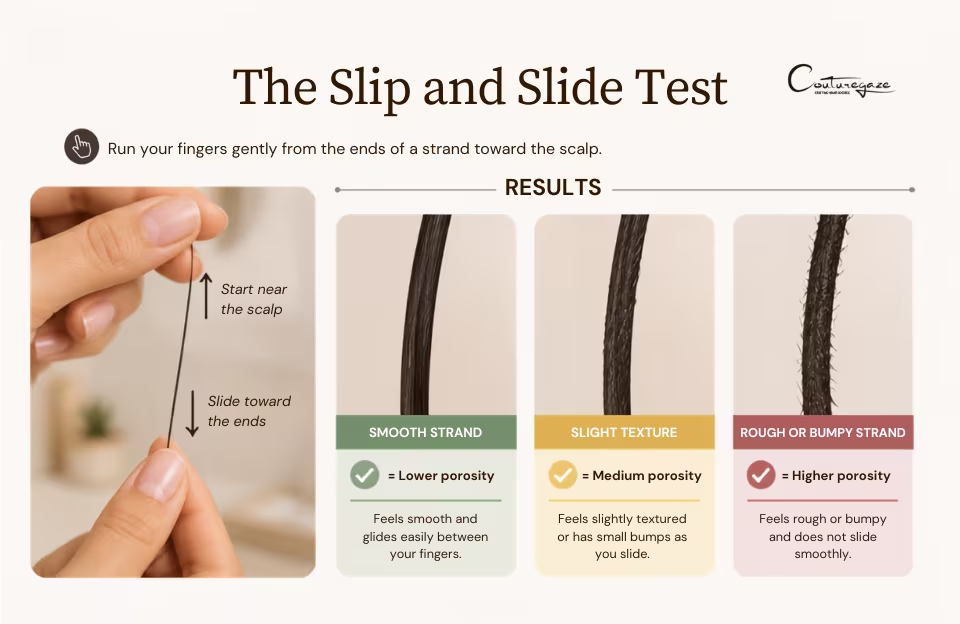
The Slip and Slide Test helps you assess the condition of your hair’s cuticle by feeling the surface of a single strand. While it won’t determine your porosity on its own, it’s a quick way to understand whether your cuticles are lying flat or are more raised.
How to Do It
- Select a clean, dry strand of hair.
- Hold it firmly near the tip.
- Using your thumb and index finger, gently slide upward from the ends toward the scalp.
- Pay close attention to how the strand feels beneath your fingers.
Results
| What You Feel | Likely Porosity |
| Smooth, silky strand | Low Porosity |
| Slight texture with minor resistance | Medium Porosity |
| Rough, bumpy, or uneven texture | High Porosity |
Why It Works
The texture of your hair strand reflects how open or closed the cuticle layer is.
- Low porosity hair has tightly packed cuticles, making the strand feel smooth.
- Medium porosity hair has slightly raised cuticles that provide balanced moisture absorption.
- High porosity hair often has lifted or damaged cuticles, creating more friction and a rougher texture.
Keep in Mind
Hair damage, split ends, chemical treatments, and product build-up can affect how the strand feels. For the most accurate assessment, combine this test with the Spray Bottle Test and Drying Time Test.
3. The Drying Time Test
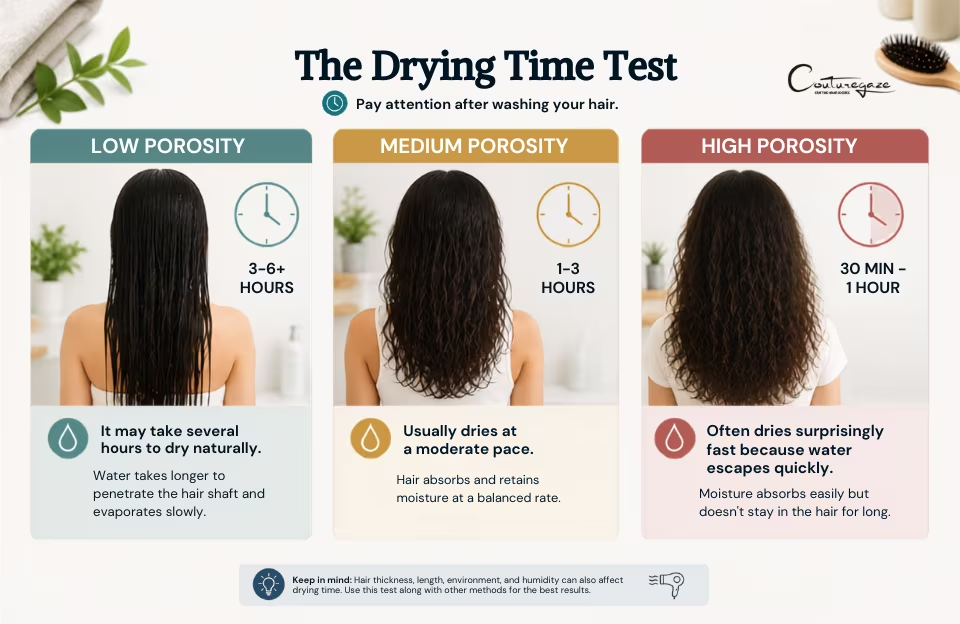
One of the easiest ways to understand your hair’s porosity is to observe how long it takes to dry after washing. Since porosity affects how quickly hair absorbs and releases water, drying time can provide useful clues about your hair’s moisture retention.
How to Do It
- Wash your hair with shampoo and conditioner as usual.
- Gently blot excess water with a microfiber towel or soft cotton T-shirt.
- Avoid using a blow dryer or styling products.
- Let your hair air dry naturally.
- Observe approximately how long it takes to become completely dry.
Results
| Drying Time | Likely Porosity |
| Takes several hours to dry | Low Porosity |
| Dries at a moderate pace | Medium Porosity |
| Dries very quickly | High Porosity |
Why It Works
- Low porosity hair absorbs water slowly, so moisture remains on the surface for longer.
- Medium porosity hair absorbs and releases moisture at a balanced rate.
- High porosity hair absorbs water quickly but also loses it rapidly because the cuticles are more open.
Remember
Drying time isn’t determined by porosity alone.
Factors such as:
- Hair length
- Hair density
- Hair thickness
- Weather and humidity
- Air circulation
can all influence how long your hair takes to dry. That’s why this test works best when combined with other porosity tests.
4. The Float Test (Popular but Limited)
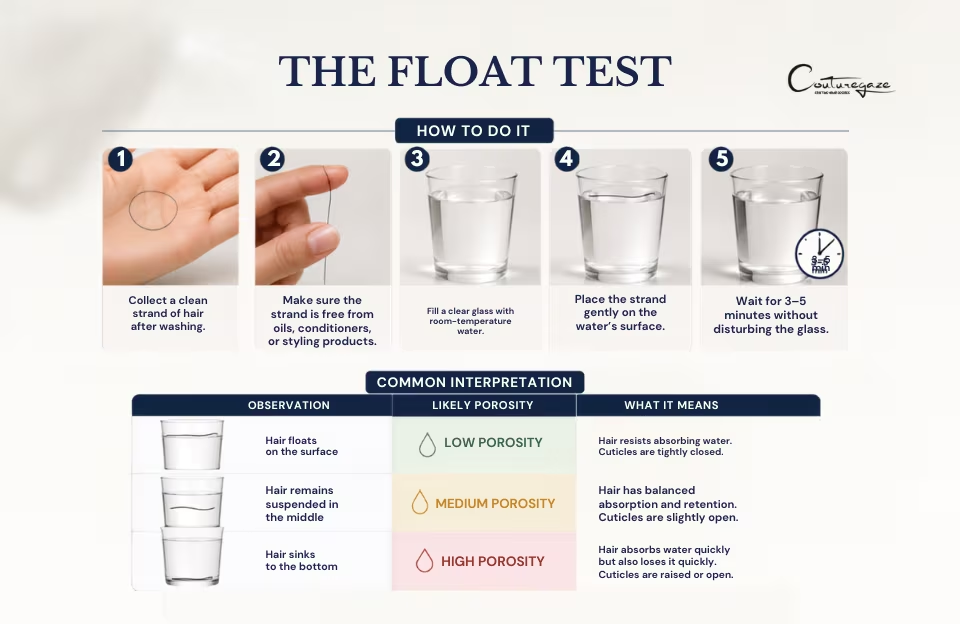
The Float Test is one of the most widely shared methods for determining hair porosity. Although it’s easy to perform, many hair experts consider it the least reliable when used on its own.
How to Do It
- Collect a clean strand of hair after washing.
- Make sure the strand is free from oils, conditioners, or styling products.
- Fill a clear glass with room-temperature water.
- Place the strand gently on the water’s surface.
- Wait for 3–5 minutes without disturbing the glass.
Common Interpretation
| Observation | Likely Porosity |
| Hair floats on the surface | Low Porosity |
| Hair remains suspended in the middle | Medium Porosity |
| Hair sinks to the bottom | High Porosity |
Why It Works
The idea behind the Float Test is that:
- Low porosity hair resists absorbing water, so it tends to float.
- Medium porosity hair absorbs water gradually.
- High porosity hair absorbs water quickly, making it heavier and more likely to sink.
But Here’s the Catch…
Despite its popularity, the Float Test has several limitations.
Results can be affected by:
- Product residue
- Natural oils (sebum)
- Hard water mineral deposits
- Tiny air bubbles trapped in the hair
- Hair thickness and density
Because of these variables, the Float Test should be viewed as one clue rather than a definitive diagnosis.
Pro Tip: For the most accurate understanding of your hair, combine the Spray Bottle Test, Slip and Slide Test, and Drying Time Test. Looking at how your hair behaves across multiple tests provides a much clearer picture than relying on a single method.
Quick comparison on the Tests
| Test | Best For | Accuracy |
| Spray Bottle Test | Moisture absorption | ⭐⭐⭐⭐⭐ |
| Slip & Slide Test | Cuticle condition | ⭐⭐⭐⭐☆ |
| Drying Time Test | Moisture retention | ⭐⭐⭐⭐☆ |
| Float Test | General indication only | ⭐⭐☆☆☆ |
Which Hair Porosity Do You Have?
| Feature | Low | Medium | High |
| Water absorption | Slow | Moderate | Fast |
| Moisture retention | Excellent | Good | Poor |
| Drying time | Long | Moderate | Fast |
| Product absorption | Slow | Balanced | Very Fast |
| Product buildup | Common | Moderate | Rare |
| Frizz | Low | Moderate | High |
| Breakage | Low | Moderate | Higher |
Best Hair Care Routine for Low Porosity Hair
Low porosity hair doesn’t necessarily need more products, it needs products that can penetrate the tightly packed cuticle.
Step 1: Clarify Regularly
Product buildup happens more easily on low porosity hair.
Using a clarifying shampoo occasionally can help remove residue and allow conditioners to work more effectively.
Step 2: Use Lightweight Moisturizers
Choose products that feel light rather than heavy.
Look for ingredients like:
- Aloe vera
- Glycerin
- Argan oil
- Jojoba oil
Avoid applying excessive amounts of thick butters if they consistently leave your hair feeling coated.
Step 3: Apply Products to Damp Hair
Slightly damp hair often absorbs products better than completely dry hair.
Step 4: Use Gentle Heat for Deep Conditioning
A warm towel or heat cap can help lift the cuticle slightly, allowing conditioning treatments to penetrate more effectively.
Best Hair Care Routine for Medium Porosity Hair
Medium porosity hair usually benefits from a balanced routine.
Focus on
- Gentle cleansing
- Regular conditioning
- Heat protection before styling
- Occasional deep conditioning
- Limiting unnecessary chemical treatments
This porosity type is generally the easiest to maintain, but consistent care helps keep the cuticle healthy over time.
Best Hair Care Routine for High Porosity Hair
High porosity hair absorbs moisture quickly but also loses it quickly.
The goal is to help lock in hydration while minimizing damage.
Step 1: Moisturize Consistently
Use moisturizing shampoos and conditioners that support the hair’s moisture balance.
Step 2: Layer Products
Many people with high porosity hair find success by applying a leave-in conditioner followed by a lightweight oil or cream to help reduce moisture loss.
Step 3: Include Protein Treatments Carefully
Protein can help strengthen damaged hair, but too much may leave some hair types feeling stiff or brittle.
Pay attention to how your hair responds and adjust accordingly.
Step 4: Reduce Heat Styling
Frequent heat styling can further damage the cuticle.
Whenever possible:
- Air dry
- Use lower heat settings
- Always apply a heat protectant
Best Ingredients by Hair Porosity
| Ingredient | Low | Medium | High |
| Aloe Vera | ⭐⭐⭐⭐⭐ | ⭐⭐⭐⭐ | ⭐⭐⭐ |
| Glycerin | ⭐⭐⭐⭐ | ⭐⭐⭐⭐ | ⭐⭐⭐ |
| Argan Oil | ⭐⭐⭐⭐⭐ | ⭐⭐⭐⭐ | ⭐⭐⭐⭐ |
| Jojoba Oil | ⭐⭐⭐⭐⭐ | ⭐⭐⭐⭐ | ⭐⭐⭐ |
| Shea Butter | ⭐⭐ | ⭐⭐⭐ | ⭐⭐⭐⭐⭐ |
| Ceramides | ⭐⭐⭐ | ⭐⭐⭐⭐ | ⭐⭐⭐⭐⭐ |
| Hydrolyzed Proteins | ⭐⭐ | ⭐⭐⭐ | ⭐⭐⭐⭐⭐ |
Common Hair Porosity Mistakes
Using Someone Else’s Routine
A routine that works beautifully for your friend may not work for your hair.
Hair type is only one part of the equation.
Applying Too Much Product
More isn’t always better.
Heavy layering can lead to buildup, especially on low porosity hair.
Skipping Heat Protection
High temperatures gradually weaken the cuticle, making hair more porous over time.
Ignoring Regular Trims
Split ends don’t repair themselves.
Regular trims help prevent damage from traveling further up the hair shaft.
For more practical tips between appointments, read our guide on Hair Maintenance Between Salon Visits: How to Keep Your Hair Healthy and Beautiful at Home.
Chasing Viral Trends
Not every trending hair hack is backed by evidence.
Choose routines based on your hair’s needs rather than social media popularity.
Hair Porosity Myths vs Facts
| Myth | Fact |
| The float test is always accurate. | It can be influenced by product residue, mineral build-up, and trapped air. |
| Drinking more water changes hair porosity. | Hydration supports overall health, but it doesn’t alter the structure of the hair cuticle. |
| High porosity hair is always damaged. | Some people naturally have higher porosity due to genetics. |
| Oils moisturize hair. | Oils help reduce moisture loss but don’t add water to the hair. |
| One routine works for everyone. | Hair type, texture, density, and porosity all influence the best routine. |
Helpful Tip: Healthy hair starts with healthy habits. While hydration won’t change your hair’s porosity, supporting your overall wellness can benefit your scalp and hair over time. If you’re unsure how much water you should be drinking each day, try our Water Intake Calculator to estimate your daily hydration needs.
Another Habit That Matters: Your body performs many repair and recovery processes during sleep. Prioritizing consistent, quality sleep supports overall wellness, including the health of your scalp and hair. If you’re looking to improve your sleep routine, our Sleep Calculator can help you find a schedule that works for you.
Expert Tips for Healthier Hair Regardless of Porosity
No matter your porosity level, a few habits can make a noticeable difference in your hair’s health over time.
Protect Your Hair from Heat
Excessive heat can weaken the hair cuticle and increase porosity over time. Whenever you use a blow dryer, curling wand, or flat iron, apply a heat protectant and keep the temperature as low as possible while still achieving your desired style.
Wash with Lukewarm Water
Very hot water may leave your hair feeling dry by removing natural oils from the hair and scalp. Washing with lukewarm water is generally a gentler option for most hair types.
Choose Products Based on Your Hair’s Needs
The “best” shampoo or conditioner isn’t necessarily the most expensive one, it’s the one that matches your hair’s porosity, texture, and overall condition.
Trim Split Ends Regularly
Split ends can’t be permanently repaired. Regular trims help maintain healthier-looking hair and reduce the appearance of damage.
Be Patient with Your Routine
Healthy hair doesn’t happen overnight. Give new products and routines several weeks before deciding whether they’re working, unless they cause irritation or obvious problems.
Frequently Asked Questions
- Can hair porosity change over time?
Yes, to some extent. While your natural porosity is largely determined by genetics, factors such as bleaching, coloring, heat styling, and environmental damage can change how porous your hair behaves. Healthy hair care habits can also improve the condition of the cuticle, although they won’t permanently change your natural porosity.
- Is hair porosity the same as hair type?
No, hair type describes your natural curl pattern (straight, wavy, curly, or coily), while hair porosity describes how your hair absorbs and retains moisture.
- Is high porosity hair always damaged?
Not necessarily, Some people naturally have high porosity hair due to genetics. However, repeated heat styling and chemical treatments can also increase porosity.
- Can I have curly hair with low porosity?
Hair type and porosity are independent characteristics. You can have curly, straight, wavy, or coily hair with low, medium, or high porosity.
- Which oils are best for low porosity hair?
Many people with low porosity hair prefer lightweight oils such as:
- Argan oil
- Jojoba oil
- Grapeseed oil
Heavy oils may work for some individuals but can leave others with buildup or weighed-down hair.
- Does drinking more water improve hair porosity?
Drinking enough water supports your overall health and helps maintain normal body functions, but it does not directly change your hair’s porosity. Hair porosity is determined by the structure of the hair cuticle.
- How often should I deep condition my hair?
It depends on your porosity and hair’s condition.
- Low porosity hair may benefit from occasional deep conditioning with gentle heat.
- Medium porosity hair often needs it less frequently.
- High porosity hair may benefit from more regular deep conditioning to support moisture retention.
- What’s the most accurate hair porosity test?
No single test is perfect.
A combination of the spray bottle test, drying time, slip test, and observing how your hair responds to products usually provides a more reliable assessment than relying on the float test alone.
- Can damaged high porosity hair be repaired?
While severely damaged hair cannot be restored to its original state, you can improve its appearance and manageability with consistent conditioning, minimizing heat damage, trimming split ends, and using products suited to your hair’s needs.
Key Takeaways
✔ Hair porosity determines how your hair absorbs and retains moisture.
✔ Hair type, texture, and porosity are different characteristics.
✔ Low, medium, and high porosity each benefit from different care routines.
✔ The float test has limitations and shouldn’t be used on its own.
✔ Choosing products based on your porosity can improve moisture balance and reduce unnecessary buildup or dryness.
✔ Healthy habits, including good hydration, quality sleep, and gentle hair care, support healthier-looking hair over time.
Conclusion
Understanding your hair porosity is one of the simplest ways to build a more effective hair care routine. Instead of following trends or buying products based on glowing reviews, you can make informed choices that suit the way your own hair absorbs and retains moisture.
Whether your hair is low, medium, or high porosity, the goal isn’t to change it, it’s to work with it. By choosing appropriate products, protecting your hair from unnecessary damage, and maintaining consistent care, you can improve your hair’s appearance, manageability, and overall health.