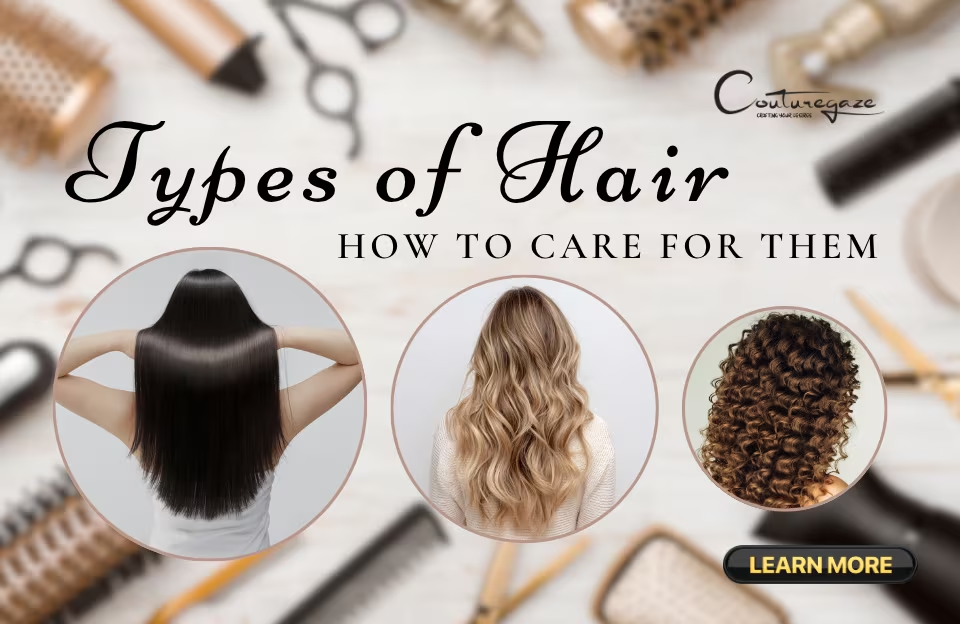
We all know that a good hair day can change everything. That’s because your hair is more than just a part of your appearance, it’s a powerful form of self-expression. Whether you wear your hair silky straight, softly wavy, tightly coiled, or full of bouncy curls, your hair type plays a major role in the styles you choose, the products you use, and how confident you feel every day. That’s why understanding your hair type is the first step toward healthier, stronger and more manageable hair.
In this complete Types of Hair and How to Care for Them guide, we’ll explore all the different hair types, including straight hair, wavy hair, curly hair and coiled hair, along with common hair textures and styling ideas for each. You’ll also learn how to care for your specific hair type properly, helping you enhance its natural beauty instead of fighting against it. By the end of this guide, you’ll have a clear roadmap to embracing your unique hair type and building a routine that keeps your hair looking its best.
- Why Understanding Types of Hair and How to Care for Them Matters
- The Four Main Types of Hair
- 1. Straight Hair (Type 1)
- 2. Wavy Hair (Type 2)
- 3. Curly Hair (Type 3)
- 4. Coily Hair (Type 3)
- How to Identify Different Types of Hair and How to Care for Them
- General Hair Care Tips for All Hair Types
- General Hair Care Tips for All Hair Types While Travelling
- 1. Pack Travel-Sized Products You Already Trust
- 2. Protect Your Hair From Climate Changes
- 3. Reduce Heat Styling During Travel
- 4. Be Aware of Water Quality
- 5. Protect Your Hair While Sleeping
- 6. Keep Hair Clean, But Don’t Over-Wash
- 7. Don’t Ignore Scalp Care
- 8. Choose Low-Stress Hairstyles for Travel Days
- 9. Adjust Your Routine, Don’t Abandon It
- 10. Support Hair Health From the Inside
- Frequently Asked Questions (FAQs)
- Conclusion
Why Understanding Types of Hair and How to Care for Them Matters
Many people struggle with frizz, dryness, breakage, or a lack of volume, not because their hair is “unmanageable,” but because they’re using products and routines that don’t match their hair type and texture. When your hair’s specific needs aren’t met, even the best products can deliver disappointing results.
Understanding types of hair and how to care for them helps you choose the right shampoos, conditioners, treatments, and styling methods that actually work for your hair. Once you identify your hair type and texture, caring for your hair becomes easier, more effective, and far less frustrating.
For example:
- Straight hair might get oily faster than curly hair.
- Coily hair is prone to dryness and breakage if not moisturized properly.
- Wavy hair can frizz easily without the right styling routine.
By identifying your hair type, you can understand how to style and care for your hair type:
- Choose the right shampoos, conditioners, and styling products.
- Learn hairstyle ideas that enhance your natural hair texture.
- Reduce damage caused by over-styling or incorrect care.
- Prevent common problems like frizz, split ends, or scalp buildup.
- Build confidence by enhancing your natural beauty.
Save money by avoiding products that don’t work for your hair.
The Four Main Types of Hair
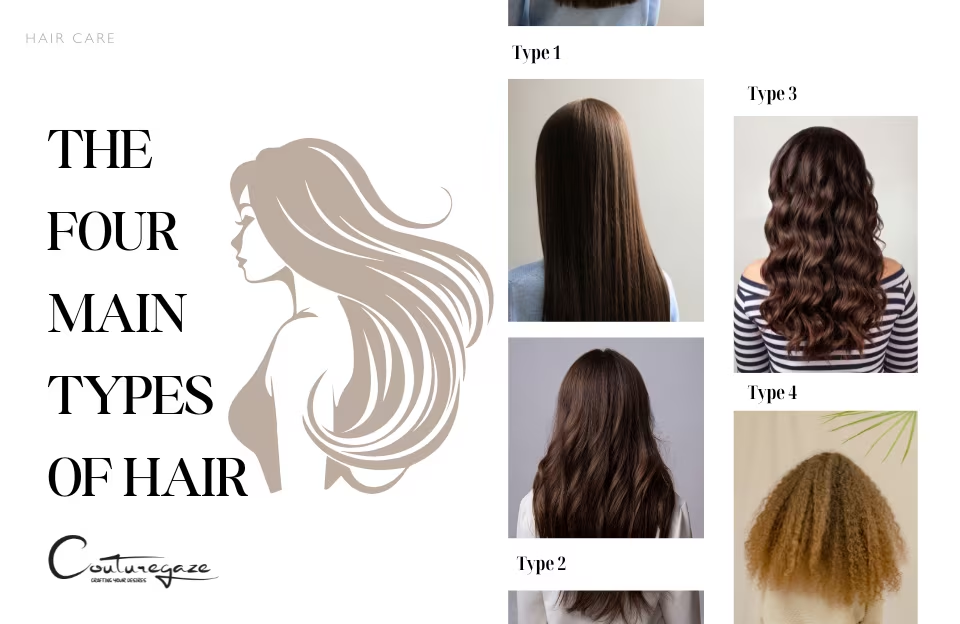
One of the most widely recognized methods for identifying hair types is the Andre Walker Hair Typing System. This system groups hair into four main categories based on its natural pattern and shape, making it easier to understand your hair’s unique characteristics and care needs.
4 Primary Hair Types include:
- Type 1: Straight Hair
- Type 2: Wavy Hair
- Type 3: Curly Hair
- Type 4: Coily Hair
Each hair type is further divided into subcategories based on factors such as strand thickness, curl tightness, and overall texture. These details help determine the best products, styling techniques, and maintenance routines for your hair. Let’s take a closer look at each hair type and what makes it unique.
1. Straight Hair (Type 1)
Straight hair is known for its smooth, sleek strands and the absence of a natural curl pattern. Because the hair shaft lies flat, straight hair reflects light easily, often giving it a naturally shiny appearance. However, this same structure allows natural oils from the scalp to travel quickly down the hair shaft, which can lead to oil buildup and a greasy look if not cared for properly.
Subtypes of Straight Hair
- Type 1A: Very fine, pin-straight hair with no wave or bend. It’s extremely smooth but struggles to hold curls and can appear limp without styling.
- Type 1B: Medium-textured straight hair with more volume and body. This type holds styles slightly better and is less prone to looking flat.
- Type 1C: Coarser, thicker straight hair that may have slight bends or frizz. It has more body but can be harder to manage and style.
Common Challenges of Straight Hair
- Excess oil buildup at the roots
- Lack of volume or body
- Difficulty holding curls or textured styles
Care Tips for Straight Hair
- To keep straight hair healthy and balanced, opt for lightweight shampoos and conditioners that won’t weigh it down
- Avoid heavy creams and oils, especially near the roots, and wash regularly, as it gets oily faster.
- Try dry shampoo for freshness between washes. Volumizing products and occasional clarifying washes can help manage oil while adding lift and movement
- Heat styling should always be paired with a heat protectant to prevent damage and maintain shine.
Hairstyle Ideas for Straight Hair
Straight hair is incredibly versatile and works well with both simple and structured styles. If you’re looking for inspiration, here are a few flattering hairstyle ideas that enhance its natural sleekness:
- Sleek ponytail or bun: Perfect for a clean, polished look that highlights shine and smooth texture.
- Layered haircuts: Adding layers creates movement and dimension, preventing straight hair from looking flat.
- Curtain bangs: Soft, face-framing bangs add style and balance while complementing straight hair’s smooth finish.
2. Wavy Hair (Type 2)
Wavy hair falls between straight and curly hair, forming soft “S-shaped” waves that add natural movement and texture. This hair type is known for its effortless, beachy look, but it can also be prone to frizz and uneven wave patterns if not cared for properly. Wavy hair often needs the right balance of moisture and lightweight styling to maintain definition without weighing it down.
Subtypes of Wavy Hair
Wavy hair is divided into three subcategories based on wave intensity and thickness:
- Type 2A: Loose, fine waves with minimal volume. This type is easy to manage but can struggle to hold texture.
- Type 2B: More defined waves that start closer to the mid-lengths, often accompanied by mild frizz.
- Type 2C: Thick, coarse waves with stronger definition that may border on curly and are more prone to frizz.
Common Challenges of Wavy Hair
- Frizz and flyaways
- Inconsistent wave patterns
- Waves are losing definition throughout the day
Wavy Hair Care Tips
- Use sulfate-free shampoos and lightweight conditioners to maintain moisture without flattening your waves
- Apply lightweight curl-enhancing creams, mousses or gels can help define waves while reducing frizz
- Use a wide-tooth comb instead of a regular brush.
- Scrunching hair while damp and air-drying or using a diffuser can enhance natural wave patterns and add volume.
Hairstyle Ideas for Wavy Hair
- Beach waves: Enhance your natural texture for a relaxed, effortless look.
- Layered cuts: Help remove bulk while boosting wave definition and movement.
- Half-up hairstyles: Showcase your waves while keeping hair out of your face.
3. Curly Hair (Type 3)
Curly hair is defined by well-formed curls that range from loose spirals to tight ringlets. This hair type is full of volume and personality, but it also tends to be naturally drier because the scalp’s natural oils have a harder time traveling down the curved hair shaft. With the right care routine, curly hair can be soft, defined, and beautifully bouncy.
Subtypes of Curly Hair
Curly hair is categorized into three main subtypes based on curl size and tightness:
- Type 3A: Large, loose curls with a shiny finish and plenty of movement.
- Type 3B: Springy, medium-sized curls with more volume and a tendency toward frizz.
- Type 3C: Tight, corkscrew curls that are densely packed and more prone to dryness.
Common Challenges of Curly Hair
- Dryness and frizz
- Tangling and breakage
- Loss of curl definition without proper moisture
Care Tips for Curly Hair
- Hydrate with moisturizing, sulfate-free shampoos and rich conditioners to lock in moisture
- Use leave-in conditioners, curl creams and gels help define curls while reducing frizz
- Detangling should be done gently with a wide-tooth comb or use your fingers while hair is wet and conditioned to prevent breakage.
Hairstyle Ideas for Curly Hair
- Defined wash-and-go styles: Highlight your natural curl pattern with minimal styling.
- Layered curly cuts: Add shape and prevent curls from looking weighed down.
- Curly bangs: Create a bold, face-framing look that enhances volume and personality.
4. Coily Hair (Type 3)
Coily hair, also known as kinky hair, features tight curls or zig-zag patterns that form close to the scalp. This hair type is incredibly versatile and rich in texture, but it is also the most fragile and prone to dryness. Because the coils are tightly packed, natural oils have difficulty traveling down the hair shaft, making consistent moisture essential for healthy coily hair.
Subtypes of Coily Hair
Coily hair is divided into three subcategories based on curl pattern and definition:
- Type 4A: Soft, well-defined coils with a visible curl pattern and springy texture.
- Type 4B: Tighter coils with a more zig-zag shape(Z-shaped strands) and less defined curls.
- Type 4C: Very tight, densely packed coils with minimal visible curl pattern and the most shrinkage.
Common Challenges of Coily Hair
- Extreme dryness and moisture loss
- Shrinkage and tangling
- Breakage due to fragile strands
Care Tips for Coily Hair
- Use gentle, sulfate-free cleansers and deep conditioners regularly, thick creams, natural oils and even butters help protect the hair and lock in moisture at the foundation of coily hair care
- Protective styles such as braids, twists, and bantu knots can reduce breakage and promote length retention
- Detangle gently and limit heat styling to preserve hair health.
- Avoid heat styling whenever possible.
Hairstyle Ideas for Coily Hair
- Twists or braids: Low-maintenance styles that protect and nourish the hair.
- Afro styles: Celebrate natural volume and texture with a bold, timeless look.
- Protective updos: Keep hair secure while reducing daily manipulation.
How to Identify Different Types of Hair and How to Care for Them
Identifying types of hair and how to care for them is an important step toward building a hair care routine that truly works for you. Many people misclassify their hair because they assess it while it’s styled, heat-treated, or weighed down by products. To get accurate results, start with clean, product-free hair and observe its natural behaviour.
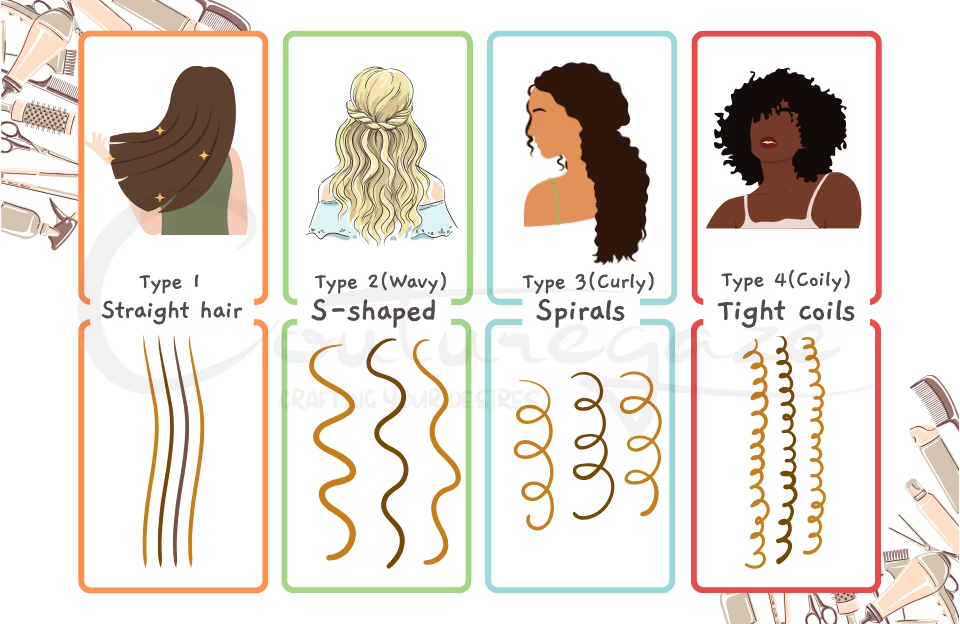
Not sure which category your hair falls into? Try these tests:
- Begin by washing your hair with a gentle shampoo and skipping conditioners, creams, and styling products
- Allow your hair to air-dry completely without manipulation. Once dry, take note of the natural pattern that forms(Types of hair):
- Straight hair (Type 1) dries without bends or curls.
- Wavy hair (Type 2) forms loose “S-shaped” waves.
- Curly hair (Type 3) develops defined curls or ringlets
- Coily hair (Type 4) forms tight coils or zig-zag patterns close to the scalp.
- Hair Texture: Check your hair texture by rubbing a strand, which refers to strand thickness – fine, medium or coarse. You can test this by rolling a single strand between your fingers or comparing it to a piece of thread. Texture affects how your hair responds to products, styling, and moisture.
- Fine Hair: Thin strands barely feel like a thread, prone to oiliness, need lightweight products
- Medium Hair: Most manageable, holds styles well, feels like cotton thread
- Coarse Hair: Thick strands, often frizz-prone, need extra moisture, feels thick and wiry
- Porosity Test: When hair professionals talk about porosity, they’re referring to how well your hair absorbs and retains moisture. In simple terms, it’s your hair’s ability to soak up hydration and hold onto it.
If your hair is highly porous, the outer layer (called the cuticle) has tiny gaps or openings. These openings can be natural, or they may develop over time due to chemical treatments, colouring, bleaching, or frequent heat styling. Because of these gaps, highly porous hair absorbs moisture very quickly, but it can also lose it just as fast.
That’s why in humid weather, porous hair often becomes frizzy. The cuticle pulls moisture from the air, causing strands to swell and lose smoothness.
The upside? Highly porous hair usually responds well to moisturizing products. Leave-in conditioners, creamy treatments, and richer butters can help fill in those gaps, seal the cuticle, and make the hair smoother and easier to manage.
On the other hand, low porosity hair has a tightly packed cuticle layer. It naturally resists moisture, which means water and products don’t easily penetrate the hair shaft. While this can help reduce frizz, it can also lead to product build-up if you’re not careful.
To keep low porosity hair healthy:- Use a clarifying shampoo once a week to prevent build-up
- Choose lightweight products like hair milks, light creams, or mousses
- Apply gentle heat (like a warm towel or blow dryer on low) when deep conditioning, heat helps slightly open the cuticle so moisture can absorb better
Understanding your hair’s porosity helps you choose products more effectively and avoid common frustrations like dryness, frizz, or build-up.
- Density Test: Hair density simply means how much hair you have on your head. An easy way to check is by looking at your scalp. If you can’t see much of your scalp without parting your hair, you likely have high (or dense) hair density. If your scalp is visible even when your hair isn’t parted, you probably have lower hair density.
Hair density isn’t fixed, it can change over time. Factors like stress, hormonal shifts, nutrition, and overall health can all influence how full your hair appears.
If you notice your hair feeling thinner or heavier than usual, it may be time to reassess the products you’re using. For example, heavy creams and oils can weigh down low-density hair, making it look flat. In that case, lightweight products like texture sprays or light mousses can help add volume and lift. On the other hand, high-density hair often benefits from richer creams and butters that help control volume, reduce frizz, and add shine.
Another simple way to estimate your hair density is the ponytail test. Gather your hair into a ponytail and measure the circumference:- Less than 2 inches suggests low density
- Around 2–3 inches indicates medium density
- 4 inches or more usually means high density
Understanding your hair density makes it much easier to choose the right styling and care routine for healthier, more manageable hair.
By identifying your hair type, texture, and porosity, you’ll be able to choose the right products, styles and routines making healthy hair care simpler, more effective, and far less frustrating for you.
General Hair Care Tips for All Hair Types
No matter whether your hair is straight, wavy, curly, or coily, some hair care habits are universally helpful. Following a few simple practices can make a big difference in keeping your hair strong, healthy, and easier to manage.
Here are some basic tips that work for almost every hair type:
- Focus on cleansing your scalp: When washing your hair, concentrate on cleaning the scalp rather than scrubbing the entire length of your strands. This removes oil and build-up while preventing unnecessary dryness on the ends. Also, avoid washing too frequently, as over washing can strip your hair of its natural oils.
- Limit excessive heat styling: Frequent use of straighteners, curling irons, or blow dryers can weaken hair over time. When you do style with heat, always apply a heat protectant to minimize damage.
- Trim split ends regularly: Even if you’re growing your hair out, trimming every 8–10 weeks helps remove split ends and keeps your hair looking healthier.
- Protect hair from sun exposure: Just like your skin, your hair can be affected by strong sunlight. Wearing a hat, scarf, or using UV-protective hair products can help prevent dryness and color fading.
- Use the right brush or comb: Different hair textures require different tools. For example, wide-tooth combs are great for detangling wet hair, while certain brushes work better for smoothing or styling specific hair types.
- Choose products based on your hair type: Instead of buying products just because they’re trending or heavily advertised, focus on formulas designed for your specific hair texture and scalp needs.
- Switch to silk or satin pillowcases: Cotton pillowcases can create friction that leads to frizz and breakage. Silk or satin pillowcases are gentler on your hair and can help reduce tangles while you sleep.
- Stay hydrated for healthier hair: Healthy hair also starts from within. Proper hydration supports scalp health and can improve hair strength and shine. If you’re unsure how much water your body needs daily, you can easily estimate it using our Water Intake Calculator.
General Hair Care Tips for All Hair Types While Travelling
While travelling is exciting but it can quietly disrupt your regular hair care routine. Changes in weather, water quality, humidity, pollution, and even hotel bedding can affect your hair more than you expect. The good news is that you don’t need a complicated routine on the road. A few smart, practical habits can help you keep your hair healthy and manageable throughout your trip, no matter your hair type.
Here are simple, reliable travel hair care tips that work for almost everyone.
1. Pack Travel-Sized Products You Already Trust
Travel is not the best time to experiment with new shampoos or styling products. Your scalp reacts best to formulas it already knows.
Carry travel-sized versions of your regular shampoo, conditioner, and essential styling products. This keeps your routine consistent and avoids surprise reactions, while also meeting airline liquid limits. Consistency beats experimentation when you’re on the move.
2. Protect Your Hair From Climate Changes
Different destinations create different hair challenges. Your hair reacts quickly to environmental shifts.
- Hot and humid weather can increase frizz and oiliness
- Cold and dry air can lead to dryness and breakage
- Beach destinations expose hair to sun and salt damage
Use a lightweight leave-in conditioner, serum, or protective spray to form a barrier against environmental stress. A small layer of protection goes a long way when you’re outdoors for long hours.
3. Reduce Heat Styling During Travel
Hair already faces stress from sun exposure, hard water, and wind while travelling. Adding frequent heat styling on top of that can increase damage.
Whenever possible:
- Let your hair air-dry
- Choose low-maintenance styles
- Use heat tools only when necessary
- Always apply heat protectant first
Less heat means less breakage and more time saved during busy travel mornings.
4. Be Aware of Water Quality
Water quality varies by location. In many places, hard water contains minerals that leave hair feeling rough, heavy, or dull.
If you notice texture changes:
- Rinse occasionally with bottled or filtered water
- Use a clarifying shampoo once a week on longer trips
This helps remove build-up and keeps hair feeling lighter and cleaner.
5. Protect Your Hair While Sleeping
Unfamiliar pillows and bedding fabrics can create friction that leads to tangles and frizz overnight.
Simple fixes:
- Tie hair loosely before bed
- Use a satin or silk scarf if you have one
- Avoid tight sleep hairstyles
These small steps help reduce breakage and make your hair easier to manage the next morning.
6. Keep Hair Clean, But Don’t Over-Wash
Travel can mean more sweat, dust, and pollution but over washing strips natural oils and weakens hair.
Adjust your wash frequency based on:
- Climate
- Activity level
- Scalp oiliness
Dry shampoo is a useful travel companion. It refreshes roots between washes without over-cleansing your scalp.
7. Don’t Ignore Scalp Care
Healthy hair starts at the scalp, even when you’re travelling.
Massage your scalp gently while shampooing to boost circulation and remove buildup. Avoid layering too many styling products, especially in hot or humid weather, as this can clog pores and cause irritation.
A clean, balanced scalp keeps hair stronger and more responsive.
8. Choose Low-Stress Hairstyles for Travel Days
Busy travel days call for practical hairstyles. Go for styles that protect hair instead of pulling on it.
Good travel-friendly options include:
- Loose braids
- Soft buns
- Relaxed ponytails
These styles reduce tangling, minimize friction, and require less restyling during the day.
9. Adjust Your Routine, Don’t Abandon It
You don’t need your full home routine while travelling, but you shouldn’t abandon hair care completely either.
Think in terms of simplification:
- Lighter products
- Fewer tools
- Protective styles
- Basic maintenance
Small adjustments help you maintain hair health without turning it into a chore.
10. Support Hair Health From the Inside
Hair health is not only about what you apply, it’s also about how you care for your body.
While travelling:
- Drink enough water
- Eat balanced meals
- Include protein and nutrient-rich foods
Hydration and nutrition support scalp balance, hair strength, and natural shine.
When prepping for a trip, most people focus on flights, accommodation, and itinerary planning and rightly so. But travel hair care is also part of smart trip preparation. Just as you benefit from structured travel guidance before setting off, If you’re new to travel and want a complete step-by-step roadmap for planning every part of your journey, check out this beginner’s guide on how to plan a trip for beginners before you pack your bags.
Frequently Asked Questions (FAQs)
1. What are the different types of hair?
There are four main types of hair based on the Andre Walker Hair Typing System: straight hair (Type 1), wavy hair (Type 2), curly hair (Type 3) and coily hair (Type 4). Each type has subcategories based on texture, thickness, and curl pattern.
2. How do I know my hair type?
To identify your hair type, wash your hair and let it air-dry without using products. Observe its natural pattern once dry. You should also consider your hair texture and porosity for accurate results.
3. What is the best hair care routine for curly hair types?
Curly hair needs moisture and gentle handling. Use sulfate-free shampoos, deep conditioners, leave-in treatments, and curl-defining creams or gels. Avoid dry brushing and detangle while hair is wet to reduce breakage.
4. Why does my hair get frizzy even after styling?
Frizz often occurs due to dryness, humidity, or using products that don’t suit your hair type. Understanding your hair type and porosity helps you choose the right products that seal moisture and reduce frizz.
5. Can my hair type change over time?
Yes, hair type can change due to factors such as hormonal shifts, aging, heat damage, chemical treatments, or lifestyle changes. It’s a good idea to reassess your hair type periodically.
6. What hairstyles work best for coily hair types?
Protective styles like braids, twists, bantu knots and updos work well for coily hair types. These styles help retain moisture, reduce breakage, and promote healthy hair growth.
Conclusion
Hair is more than just strands, it’s a reflection of personality, culture and style. By understanding types of hair and how to care for them, whether straight, wavy, curly, or coily, you can create a care routine that works with your natural texture instead of against it.. The right products and hair styling techniques can make a noticeable difference, helping your hair not only look amazing but stay healthy and strong and more vibrant every day.
Whether you’re looking for the best curly hair types routine, the perfect wavy hair care tips, or hairstyle ideas for straight or coily hair, remember that every hair type is unique and beautiful in its own way. Embracing your natural hair is the first step toward confidence and long-term hair health.
Love your hair type, care for it, and it will love you back.
If you found this types of hair and how to care for them guide helpful, don’t forget to share it with friends and family. For more tips on fashion, beauty, and lifestyle, subscribe to our newsletter and stay inspired.